


Stage 15 From Glacier to Wine North Route Hochschwab Schiestlhaus - Seewiesen
Characteristics
SkillThe tour in numbers
Level of difficulty
medium
Route
11,9 km
Time
4:30 h
Uphill
48 hm
Downhill
1269 hm
Highest point
2158 m
This stage leads from the Schiestlhaus, just below the summit of the Hochschwab, to the small and picturesque village of Seewiesen at the foot of the Seebergsattel, the mountain pass connecting the Aflenz Basin with the Mariazell region. It is undoubtedly one of the most scenic stages of the Hiking Trail From Glacier to Wine. Spectacular views of the surrounding mountain landscapes accompany hikers throughout the day. However, the beauty of the scenery should not distract from the fact that this route traverses high-alpine terrain, where surefootedness and a good head for heights are essential. Particular care is required on the descent via the Graf Meran Trail, which winds its way downhill in numerous switchbacks. Some sections are secured with steel cables to assist hikers in steeper terrain.
For many decades, the Hochschwab massif has played a vital role in supplying drinking water to the cities of Vienna and Graz. While the importance of the northern Hochschwab springs for Vienna's famous mountain spring water supply is widely known, the water resources on the southern side of the massif have also contributed to the drinking water supply of Graz and its surrounding region since 1993.
During the Ice Age, vast gravel deposits accumulated on the southern slopes of the Hochschwab. These natural gravel layers act both as a reservoir and as a highly effective filtration system for the karst water flowing through them. Hidden deep beneath the mountain, within the karst formations and gravel beds, lies a precious natural resource: exceptionally pure and crystal-clear drinking water.
Dolines, sinkholes, shafts, fissures, and crevices channel rainwater and meltwater deep into the mountain. Beneath the surface, the Hochschwab is traversed by an extensive network of underground waterways, caves, and lakes, creating one of the most important water reservoirs in Austria.
Many of these geological features can be observed along today's route. However, they also highlight the need for caution: in poor visibility, especially during fog, hiking on the Hochschwab plateau is strongly discouraged, as orientation can quickly become difficult in the vast karst landscape.
This stage also forms part of the BergZeitReise circular hiking trail, which leads through the wild and romantic mountain landscapes of Hochsteiermark.
Best season
January
February
March
April
May
June
July
August
September
October
November
December
More information
Detailed information on how to get to Schiestlhaus can be found here.
The Schiestlhaus is not directly accessible by car or public transport, more information can be obtained directly from the Schiestlhaus.
From the Schiestlhaus (Tel. +43 699 10812199), the route initially heads east before soon reaching a junction, where we keep right and descend via the Graf Meran Trail into the Obere Dullwitz. Despite the spectacular scenery, particular caution is required on this section. Please take care not to dislodge any loose stones, as the trail is frequently used by hikers travelling in both directions.
Along the way, we are accompanied by the distinctive whistles of the local marmots. Their burrows can be found on both sides of the trail and, with a little patience, hikers may be rewarded with the sight of these charming animals basking in the sun outside their dens. As soon as hikers or birds of prey approach, however, the marmots sound a loud warning call before quickly disappearing underground.
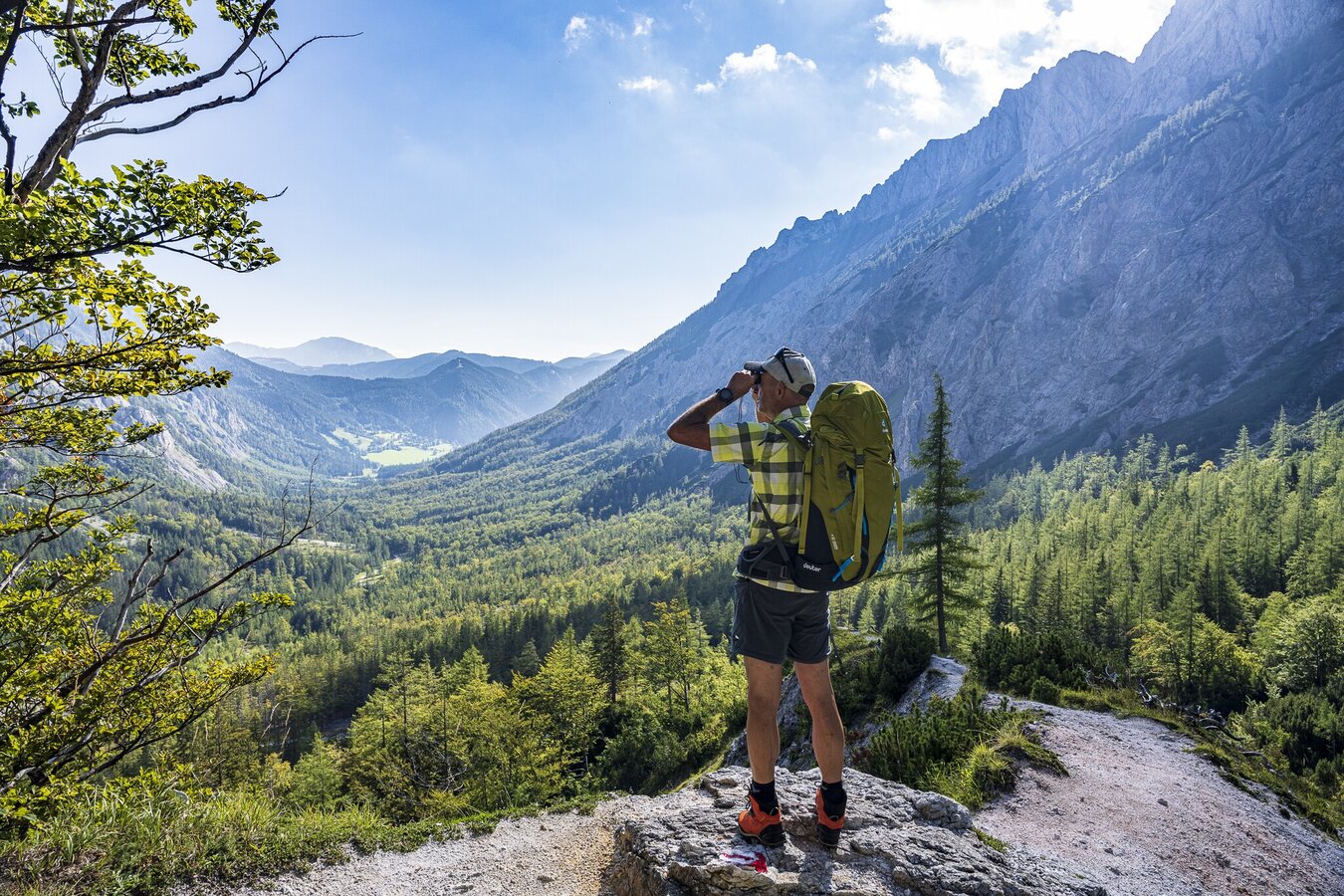
Upon reaching the Obere Dullwitz, we keep left and continue to the popular Voisthalerhütte (Tel. +43 664 5112475), one of the most important mountain huts in the Hochschwab region. Situated in a narrow basin beneath towering rock faces, this Alpine Club hut was originally built in 1898 and has been expanded several times since. The views down the valley are impressive at any time of day – and this is precisely the direction in which our route continues.
From the Voisthalerhütte, the trail follows the valley of the same name to the Franzosenkreuz. In 1805, during the French occupation of Styria, the people of Seewiesen sought refuge on this elevated position and survived the turbulent period. In gratitude for their liberation, a wooden cross was erected here, giving the site its name.
From the Franzosenkreuz, the route continues out of the valley to Seewiesen (Tourist Information Tel. +43 664 3548485 or +43 3861 3700), today's stage destination on the Hiking Trail From Glacier to Wine.
The following day brings the next mountain massif: the route continues towards the Hohe Veitsch.
Emergency call mountain rescue: 140
Tips when reporting an emergency – Answer these six WH questions: What happened? How many people are injured? Where did the accident happen (are there GPS coordinates)? Who is reporting the incident (callback number)? When did the accident happen? What is the weather like at the site of the incident?
Proper backpack packing makes many things easier: Pack heavy things first. The water bottle should always be within reach in a side pocket. All the things that are often needed, such as sunglasses, camera or hiking map, belong on top. An emergency kit, including blister plasters, belongs in every rucksack and it is always advisable to dress in layers.Detailed information about arriving by ÖBB (Austrian Federal
Railways) can be found at www.oebb.at or
on the Verbundlinie Steiermark website www.busbahnbim.at
With
Verbundlinie’s BusBahnBim route planner app, planning your journey
has never been easier: simply enter towns and/or addresses, stop names or
points of interest to check all bus, train and tram connections in Austria. The
app is available free of charge for smartphones – on Google Play and in the App
Store
Steiermark Tourismus, Tel. +43 316 4003
www.steiermark.com
Kompass WK212 Hochschwab, Mariazell, Eisenwurzen www.kompass.at
Freytag & Berndt WK41 Hochschwab · Veitschalpe · Eisenerz · Bruck an der Mur www.freytagberndt.at
Map & downloads
Gallery
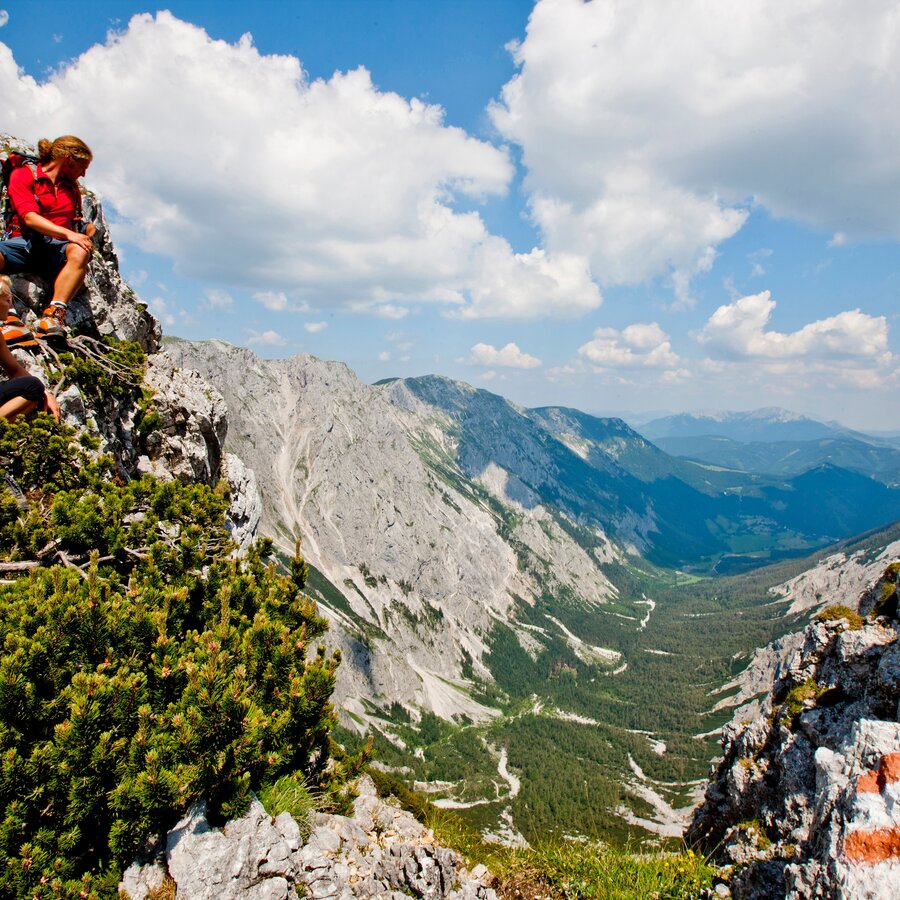
Blick in die Dullwitz Richtung Seewiesen | © Steiermark Tourismus | Tom Lamm
1/9
Wanderroute "Vom Gletscher zum Wein" | Weitwanderweg Steiermark | © Steiermark - Das Grüne Herz
2/9
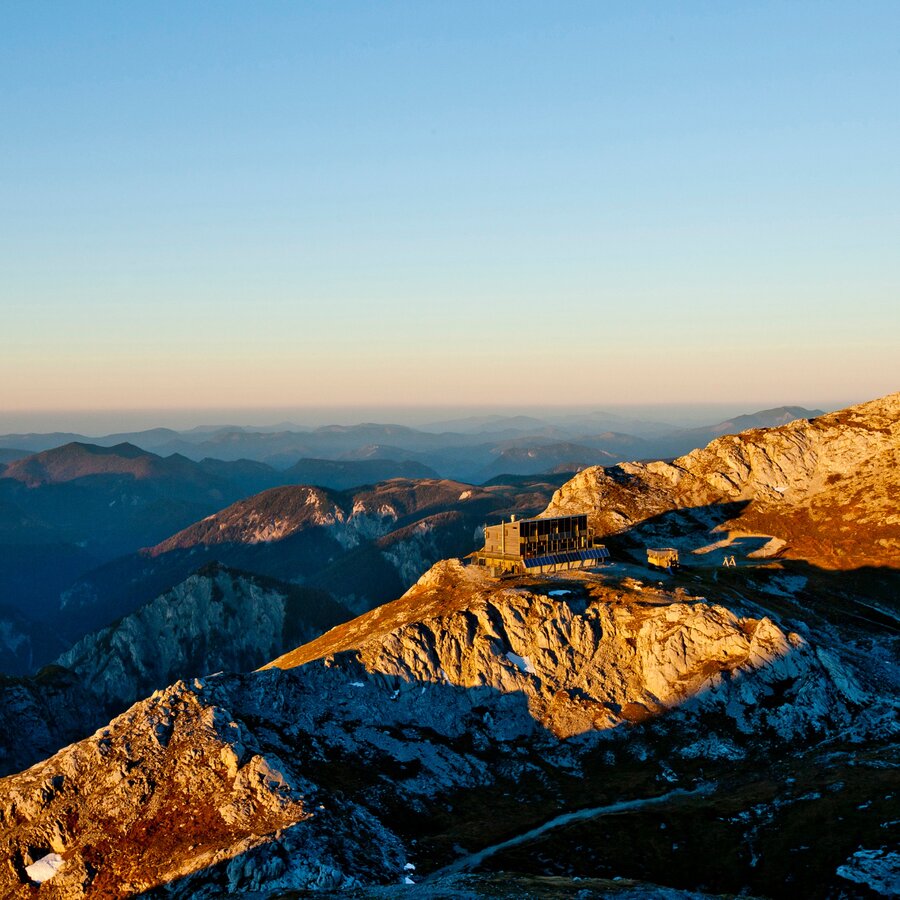
Blick auf das Schiestlhaus | © Steiermark Tourismus | Tom Lamm
3/9
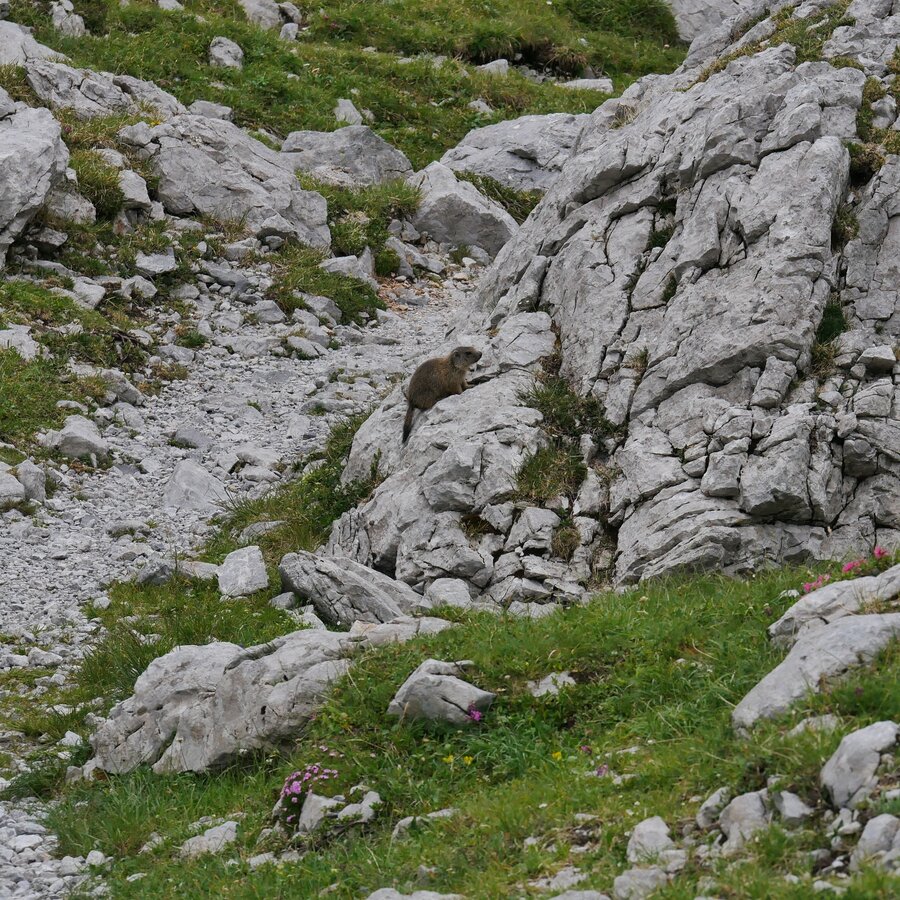
Murmeltierbegegnung | © Steiermark Tourismus | Manfred Polansky
4/9
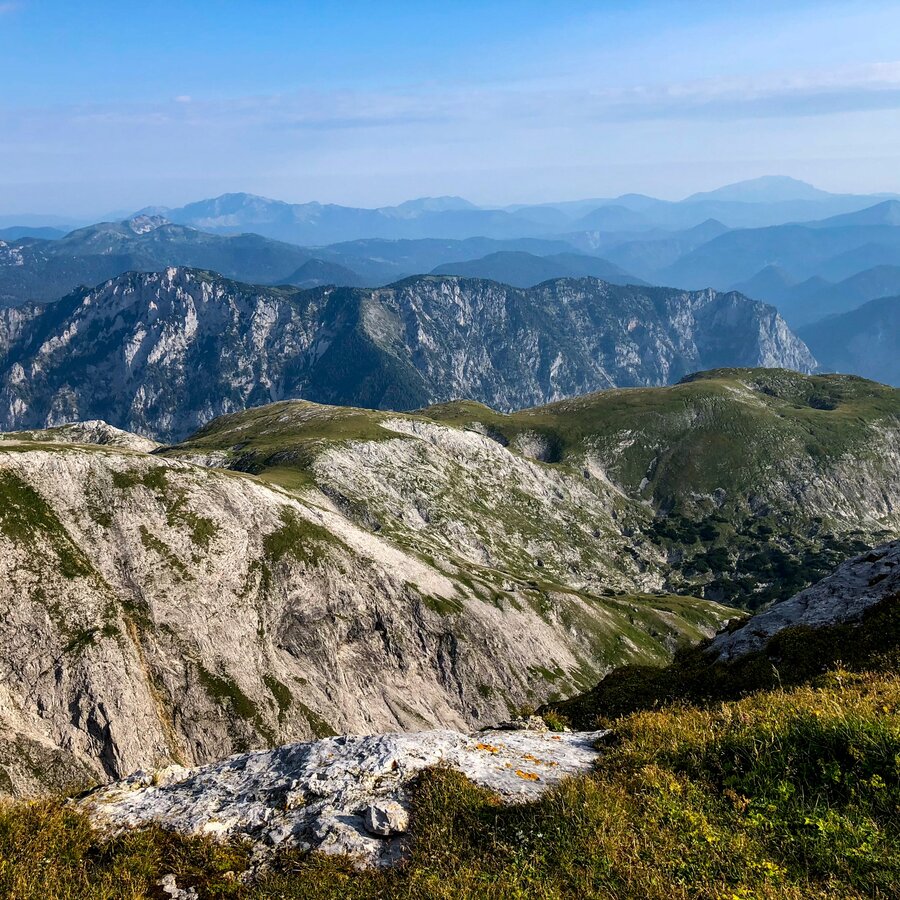
Weitblick am Hochschwab | © Steiermark Tourismus | Manfred Polansky
5/9
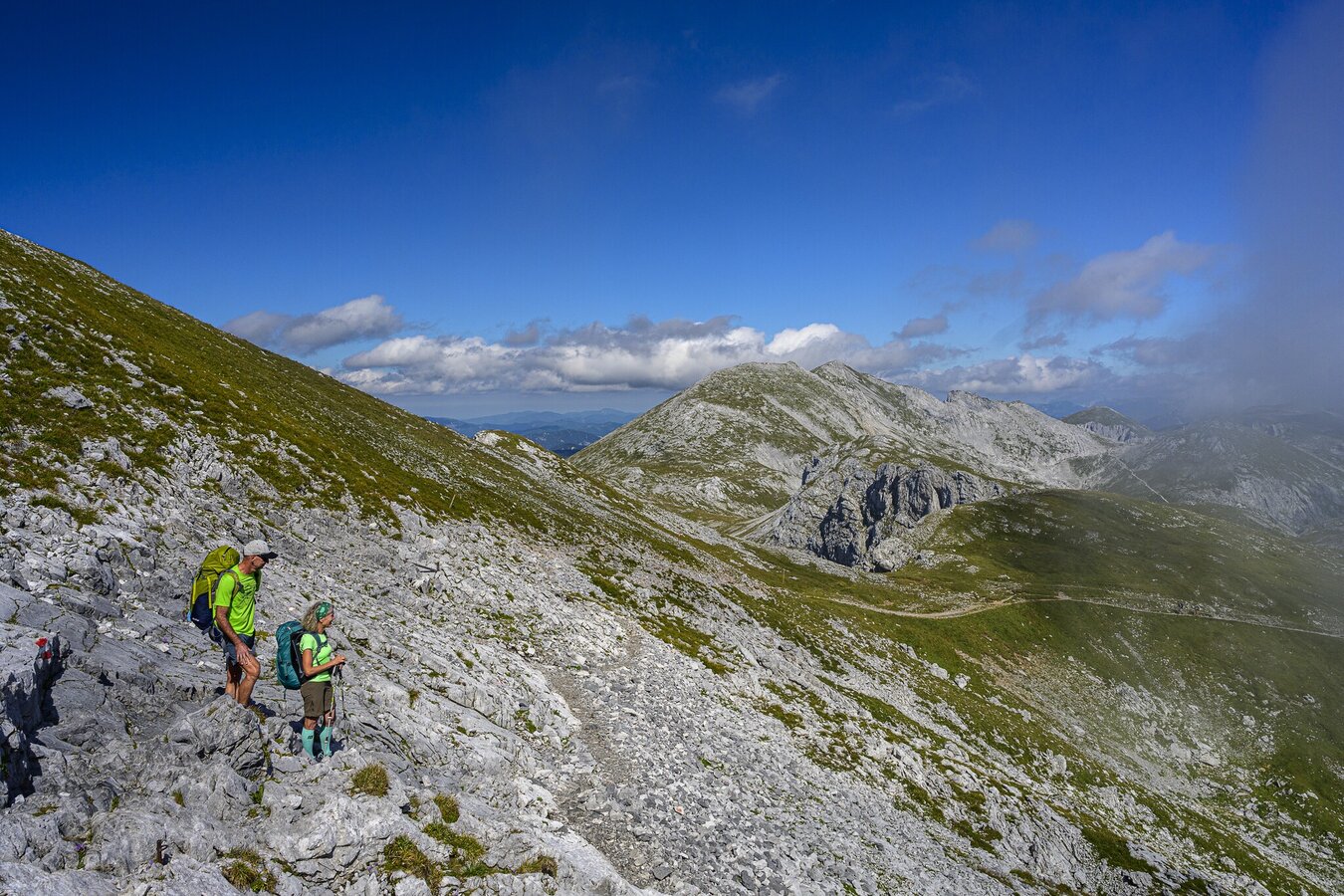
hochschwab-abstieg_steiermark-tourismus-_-pixelmaker.at.jpg | © Seiermark Tourismus | pixelmaker.at
6/9
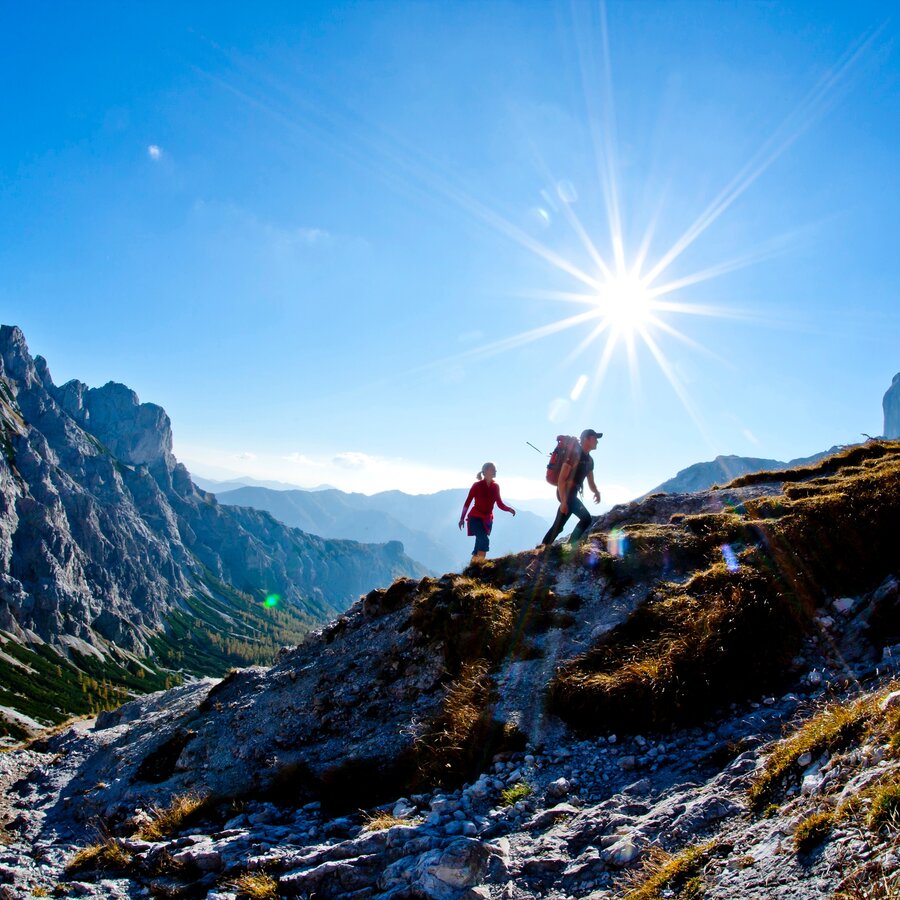
Begegnungen in der Dullwitz | © Steiermark Tourismus | Tom Lamm
7/9
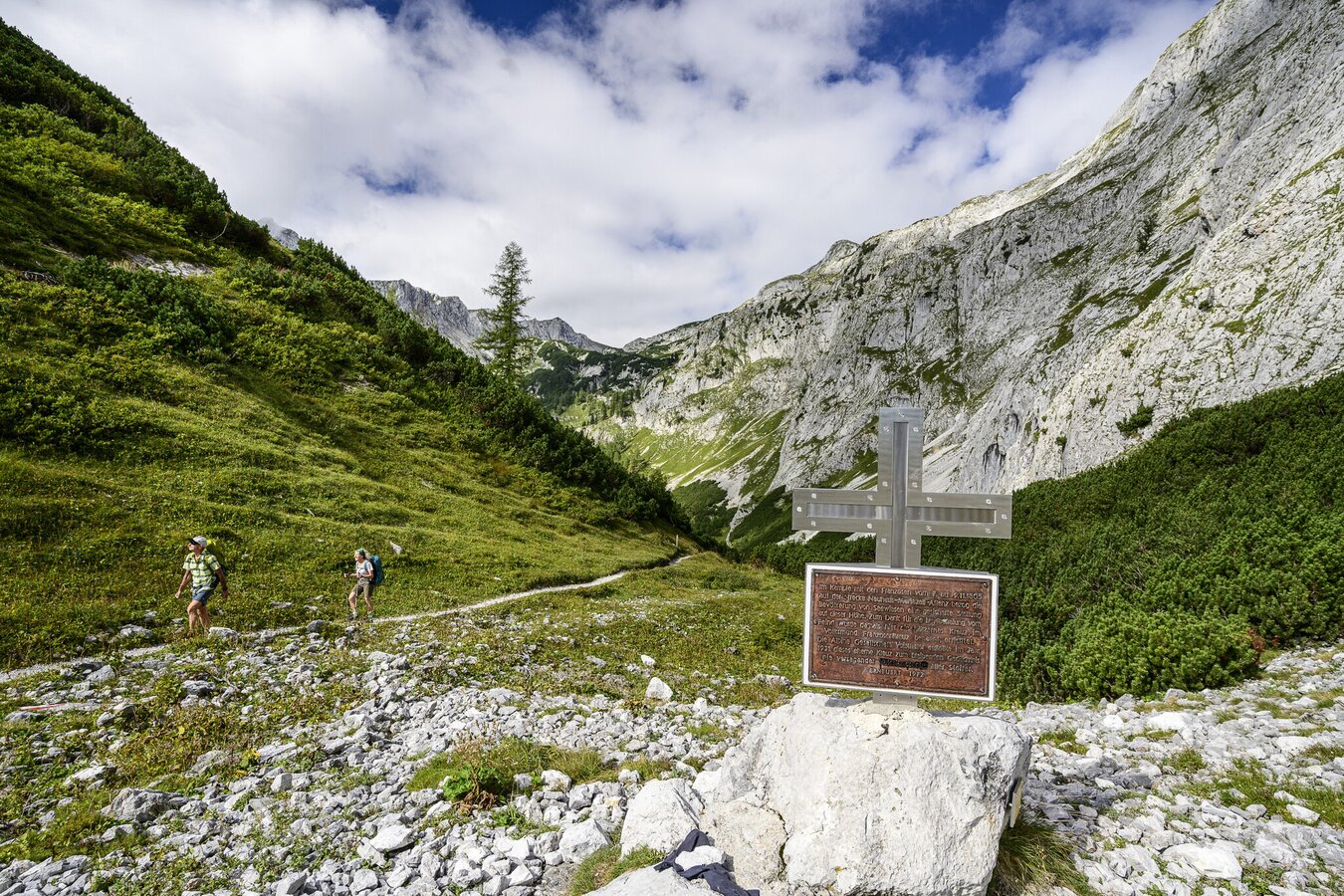
franzosenkreuz_steiermark-tourismus-_-pixelmaker.at.jpg | © Seiermark Tourismus | pixelmaker.at
8/9
seewiesen_steiermark-tourismus-_-pixelmaker.at.jpg | © Seiermark Tourismus | pixelmaker.at
9/9

What the weather will be like Thörl (643m)
Today, 18.10.2026
Early clouds will gradually clear to leave the region with a dry and sunny day.Morning

9°C
sr.Regenwahrscheinlichkeit
0%
sr.Windstärke
0 km/h
Noon
17°C
sr.Regenwahrscheinlichkeit
0%
sr.Windstärke
5 km/h
Night

11°C
sr.Regenwahrscheinlichkeit
0%
sr.Windstärke
0 km/h
Tomorrow, 19.10.2026
The day will be dry, but mostly cloudy with occasional sunny spells.Morning

7°C
sr.Regenwahrscheinlichkeit
0%
sr.Windstärke
0 km/h
Noon
14°C
sr.Regenwahrscheinlichkeit
0%
sr.Windstärke
5 km/h
Night
10°C
sr.Regenwahrscheinlichkeit
5%
sr.Windstärke
0 km/h
Forecast
20.10.2026
6°C
15°C
21.10.2026
9°C
17°C
22.10.2026

6°C
11°C
