


Stage 1 Grazer Bergland Hiking Trail: Peggau – Frohnleiten
Accessible by public transport- Train (within 15 minutes walking distance from starting point)
Characteristics
SkillThe tour in numbers
Level of difficulty
medium
Route
17,1 km
Time
6:00 h
Uphill
850 hm
Downhill
830 hm
Highest point
1239 m
From Peggau through forests and across ridgelines up to the Hochtrötsch. Wide views of the Almenland and the Mur valley accompany the first stage to Frohnleiten.
With the support of the Austrian Federal Government, the State of Styria and the European Union (LEADER).
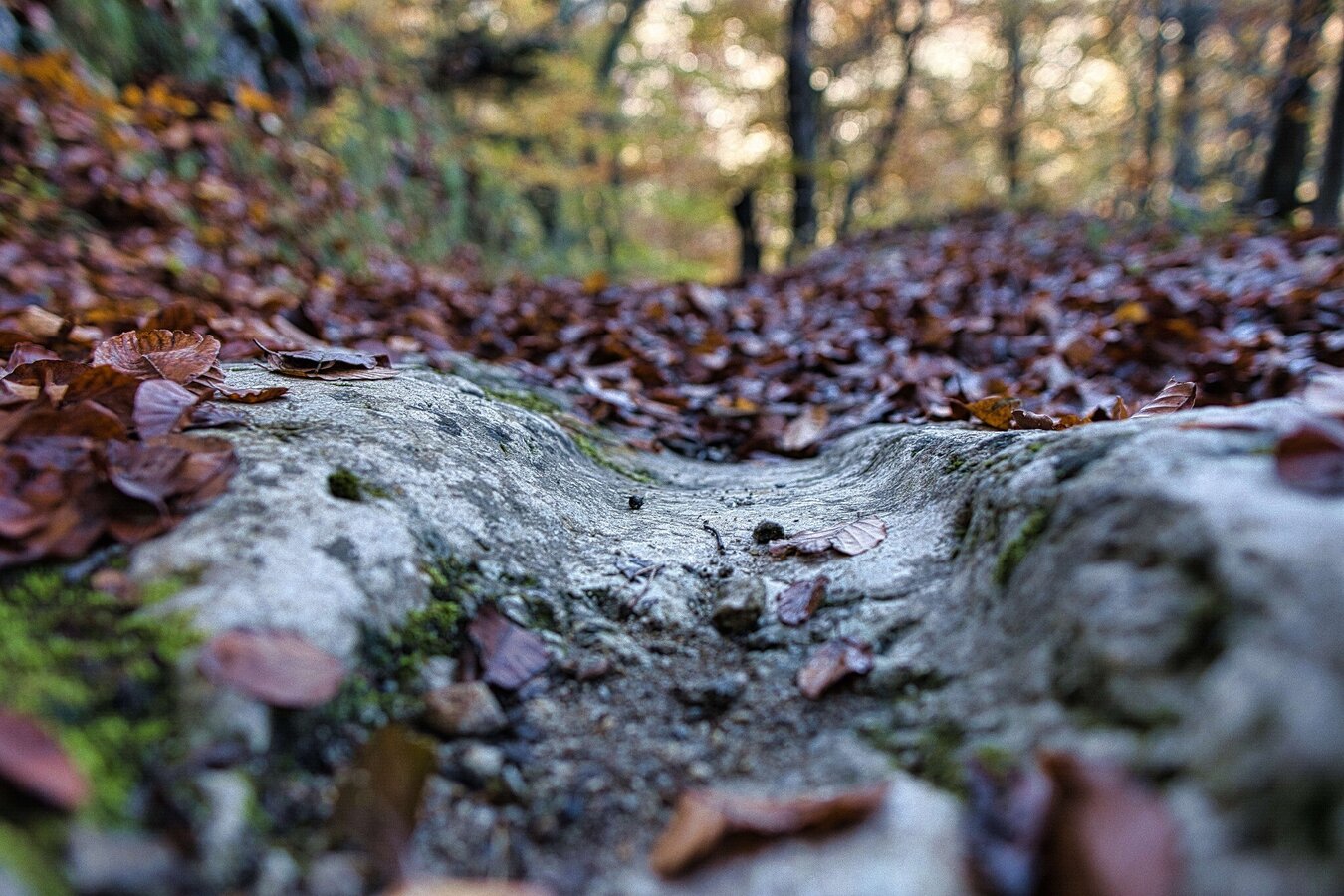
The first stage starts in Peggau, surrounded by striking rock formations and karst landscapes. The Lurgrotte, Austria’s largest stalactite cave, is located here. Along old routes, wheel tracks from historic carts are still visible, while the Badlwandgalerie recalls the region’s early railway history.
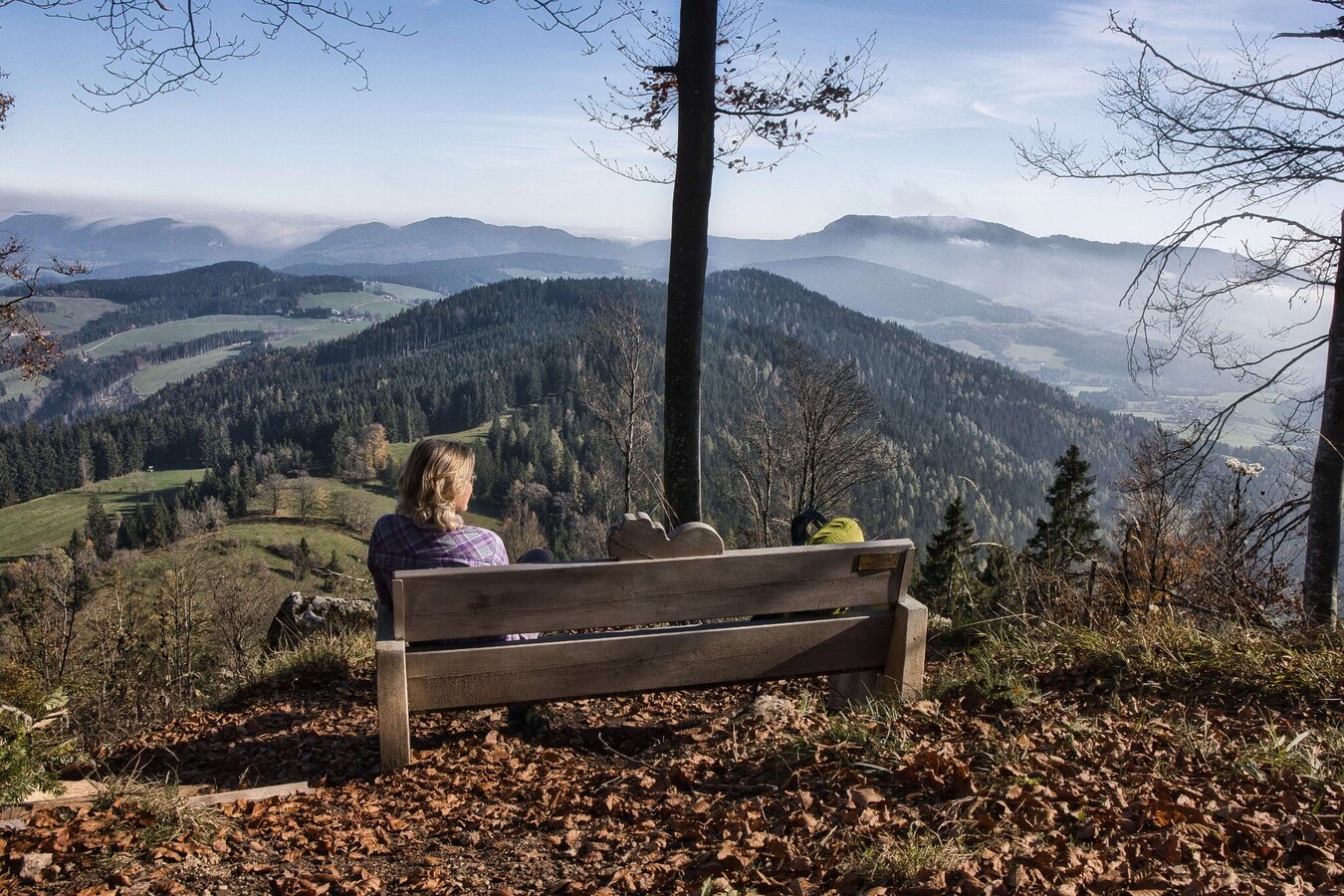
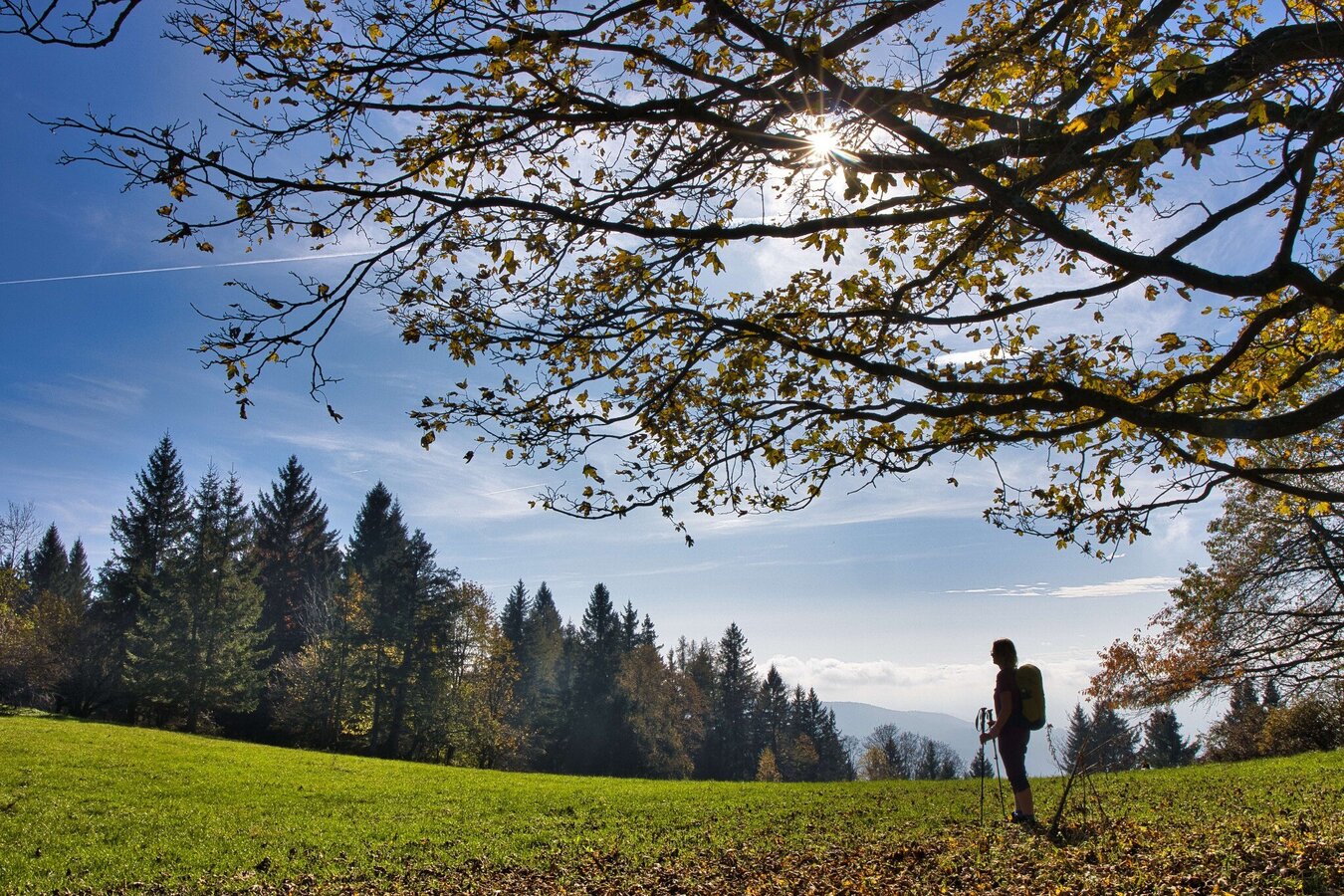
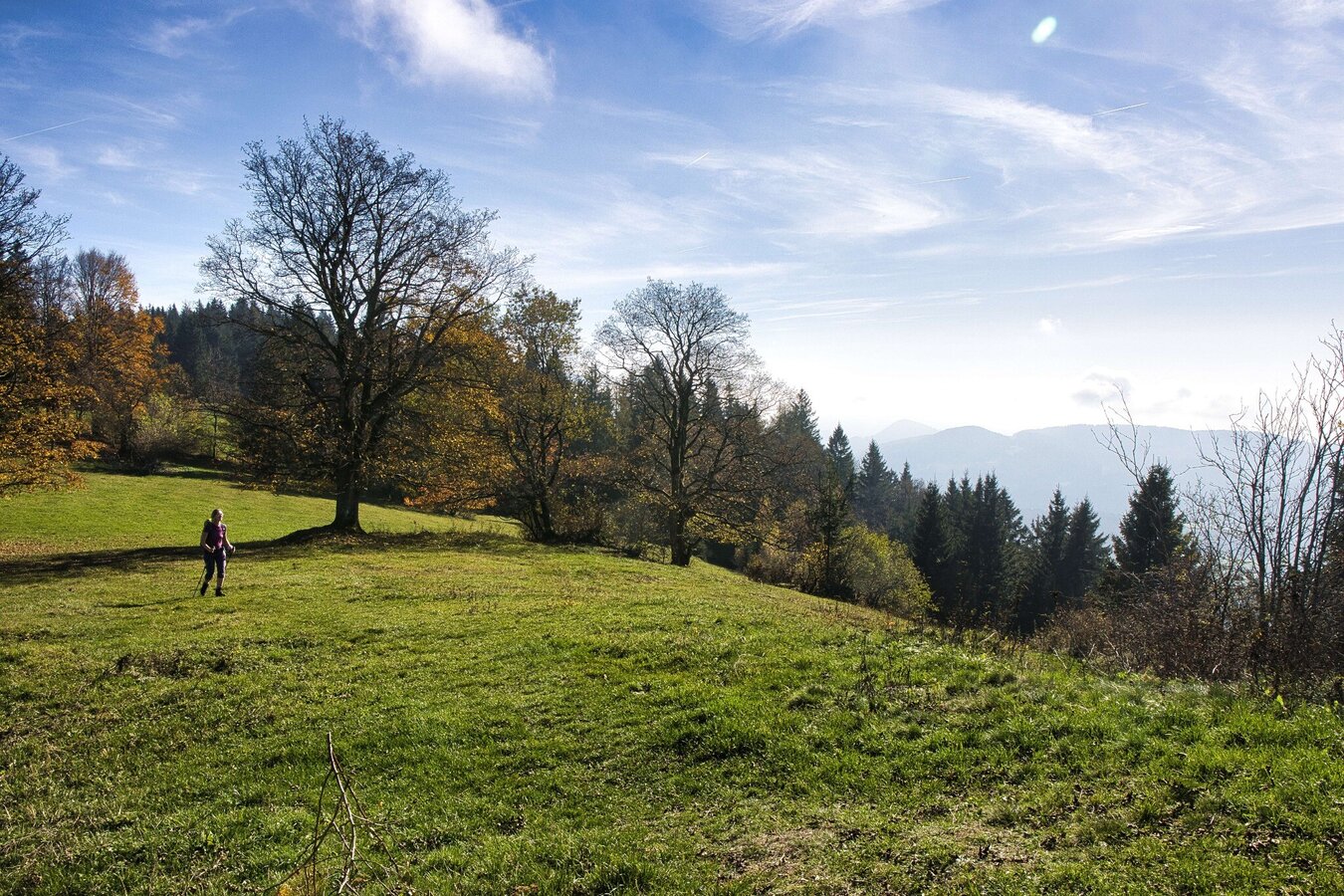
The route passes through Peggau, Semriach and Frohnleiten, crossing forested slopes, open meadows and scattered settlements of the Grazer Bergland. The climb to Hochtrötsch requires steady effort and rewards hikers with wide views across the Almenland. A rest stop near the Hopfenhöhle offers a good place to pause.
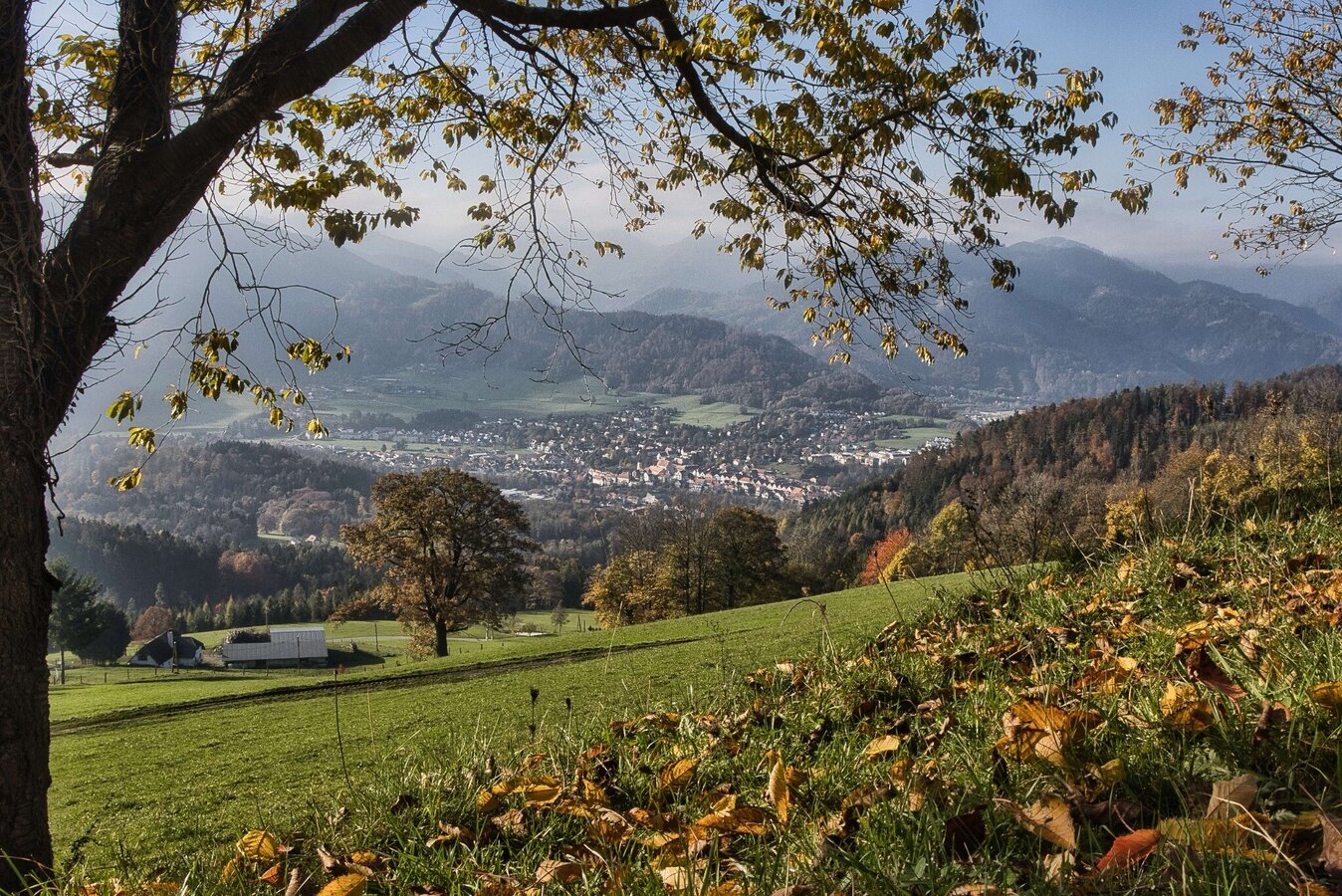
The descent leads through woodland and pastures towards Dürnberg. As the elevation drops, the Mur valley opens up and Frohnleiten comes into view. In the distance, Haneggkogel already marks the next highlight of the Grazer Bergland Hiking Trail.
Best season
January
February
March
April
May
June
July
August
September
October
November
December
More information
We recommend arriving by public transport, as both the starting point and the end of the tour are located at railway stations, which is better for the environment.
The stage starts at Peggau-Deutschfeistritz railway station (410 m). The route initially follows the road towards the Lurgrotte. After passing the entrance, the trail gradually climbs and later turns onto a side road that leads into the historic Römerweg.
The ascent continues steadily through forest and open meadows. After reaching the upper entry of the Badlgraben, the route arrives at Schönegg (778 m). Sections of asphalt alternate with woodland paths before the scattered houses of Rüster (954 m) are passed.
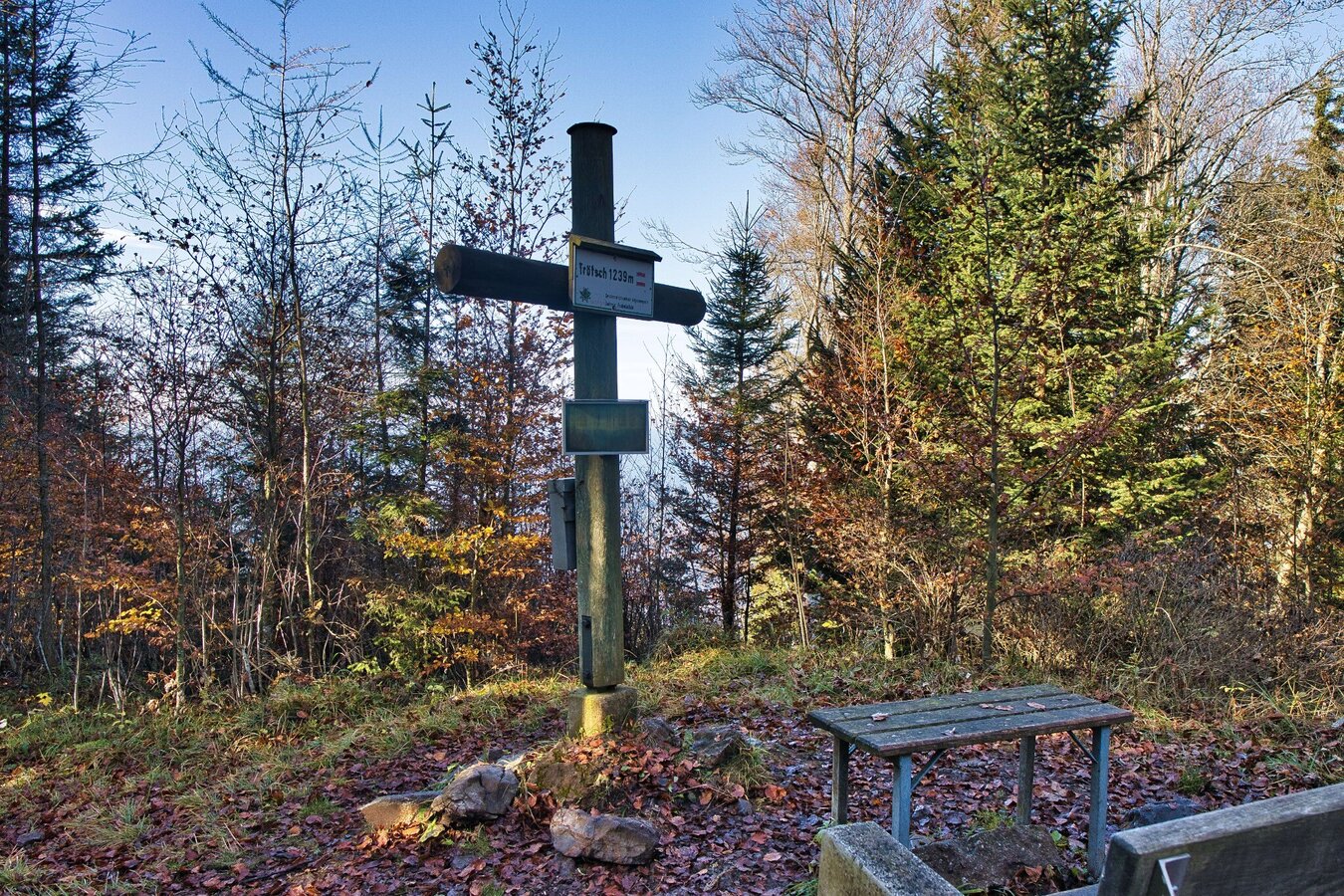
Across alpine meadows, a steeper climb leads up to the rest area at the Hopfenhöhle. Shortly afterwards, the wooded summit of Hochtrötsch (1239 m) is reached, marking the highest point of the stage.
The descent runs mainly through forest towards Dürnberg. The trail then continues via meadows, woodland and quiet roads down to Laas. An avenue leads into the final section, which follows a path and then a road to the finish at Frohnleiten railway station (381 m).
Stage Overview:
Start: Peggau-Deutschfeistritz railway station (flux GU4539)
0.9 km Lurgrotte entrance
1.3 km Junction Peggau-Binderanderl (flux GU4500)
1.8 km Römerweg
6.7 km Schönegg
10.7 km Hopfenhöhle viewpoint and rest area
11.1 km Hochtrötsch (1239 m)
13.5 km Dürnberg (flux GU1220 Pfannberg Laas-Bloder)
15.9 km Laas
Finish: 17.1 km Frohnleiten railway station (flux GU1269)
The route crosses forests, open meadows and partly pastureland. Appropriate care and consideration are required.
Footwear & Support
Hiking or mountain boots suitable for the stage
Telescopic poles, preferably three section poles with compact pack size
Clothing
Comfortable, quick drying hiking trousers
Layered clothing system with T shirt, mid layer and hooded jacket
Gloves and headwear such as cap or beanie
Weather & Sun Protection
Light rain poncho or umbrella
Sun protection including cap, sunglasses, sunscreen and optional UV clothing
Backpack & Supplies
Daypack with rain cover
Water bottle
Snack box and energy snacks
Navigation & Safety
Mobile phone or GPS device with GPX track
Power bank
Headlamp
First aid kit including blister plasters
Grazer Bergland hiking map with marked route
Shortcut
After 13.5 km, the flux stop Pfannberg Laas-Bloder (GU1220) offers the option to shorten the stage.
Points of interest
The Lurgrotte Peggau is one of Austria’s largest stalactite caves and is located close to the starting point of the stage.
Train
S1 railway line between Graz and Bruck an der Mur with stops at Peggau-Deutschfeistritz and Frohnleiten railway stations.
Further information on train and bus connections at www.oebb.at and www.verbundlinie.at
Shared taxi flux
Further information at www.flux.at
Free hiking map and information:
Graz Region Tourist Board
Herrengasse 16, 8010 Graz
T +43 316 80750
info@regiongraz.at
Graz Region Information Office Frohnleiten
Hauptplatz 31, 8130 Frohnleiten
T +43 3126 2374
Graz Region Tourist Board
Herrengasse 16, 8010 Graz
T +43 316 80750
info@regiongraz.at
Graz Region Information Office Frohnleiten
Hauptplatz 31, 8130 Frohnleiten
T +43 3126 2374
Map & downloads
Gallery
IMG_2638.jpg | © Weges OG | Weges OG
1/10
IMG_2622.jpg | © Weges OG | Weges OG
2/10
IMG_2528.jpg | © Weges OG | Weges OG
3/10
IMG_2601.jpg | © Weges OG | Weges OG
4/10
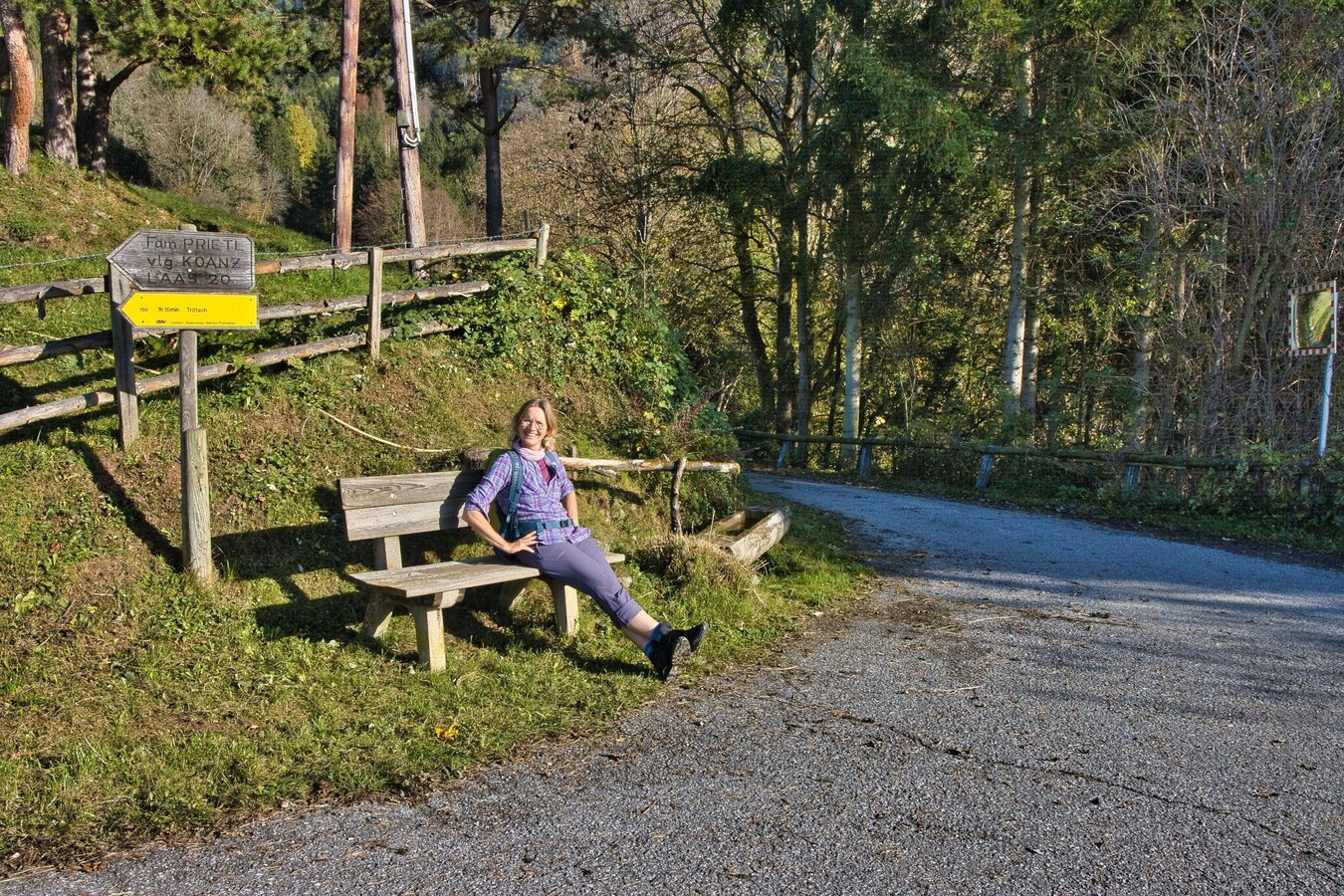
IMG_2671.jpg | © Weges OG | Weges OG
5/10
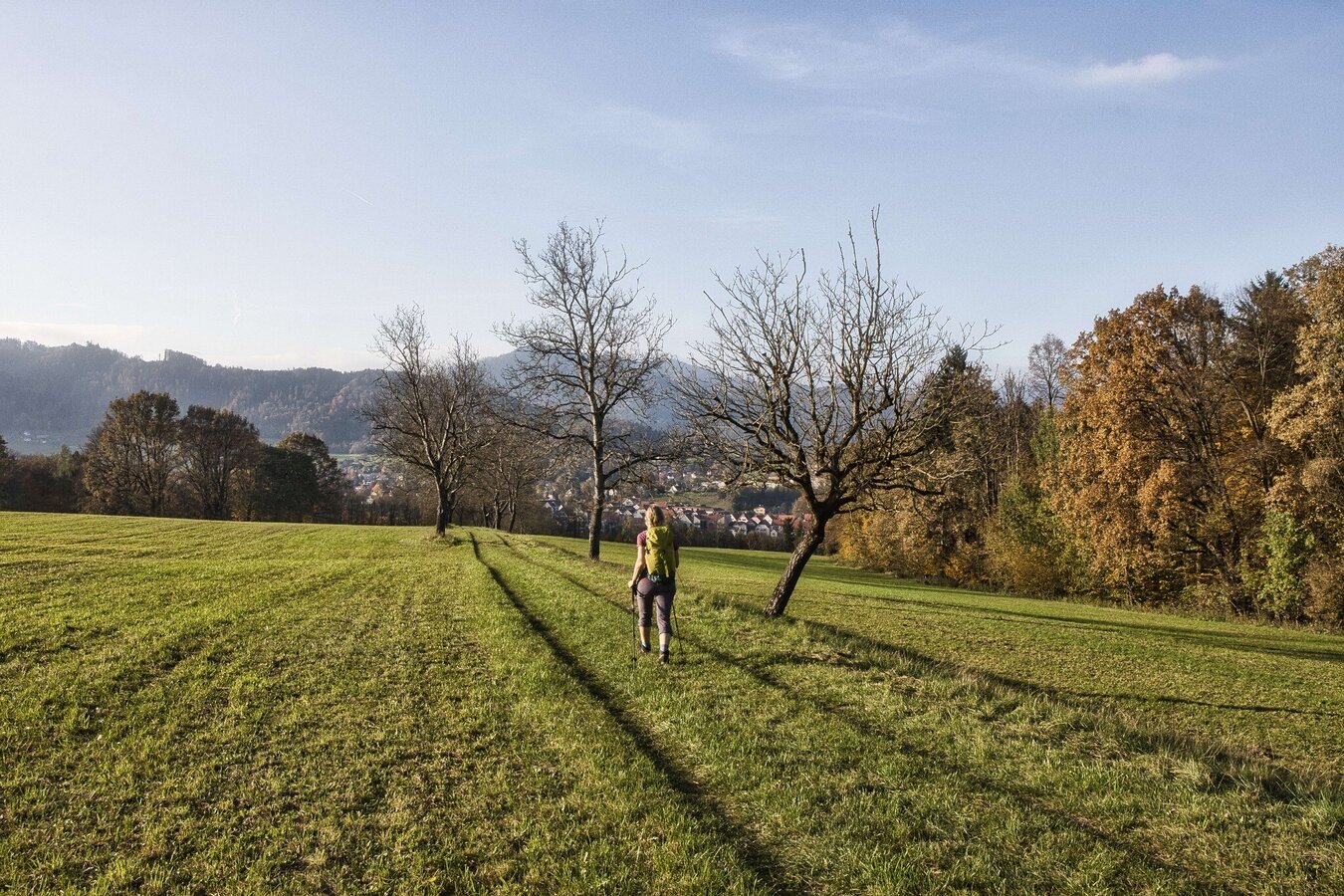
IMG_2678.jpg | © Weges OG | Weges OG
6/10
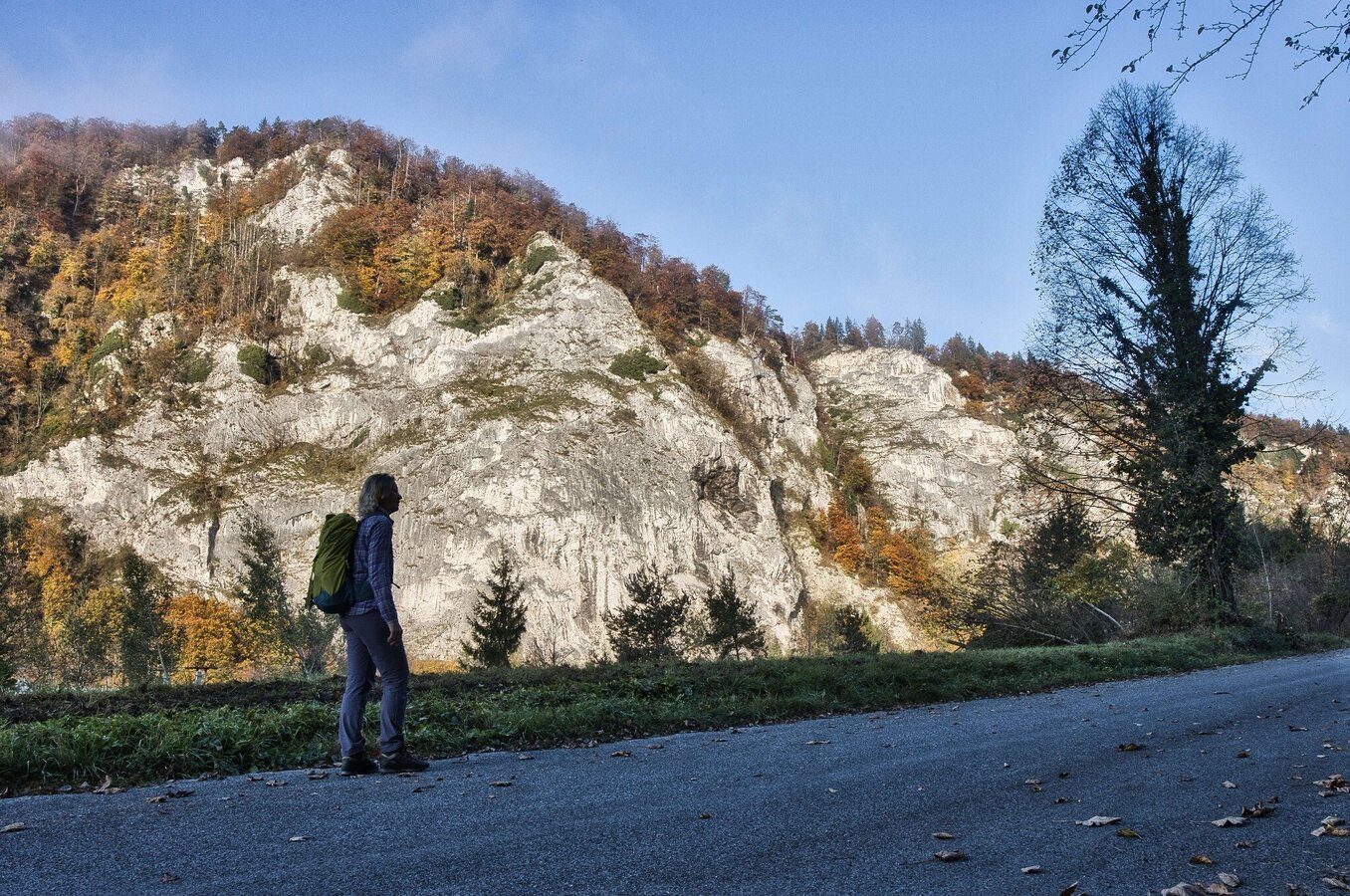
IMG_2502.jpg | © Weges OG | Weges OG
7/10
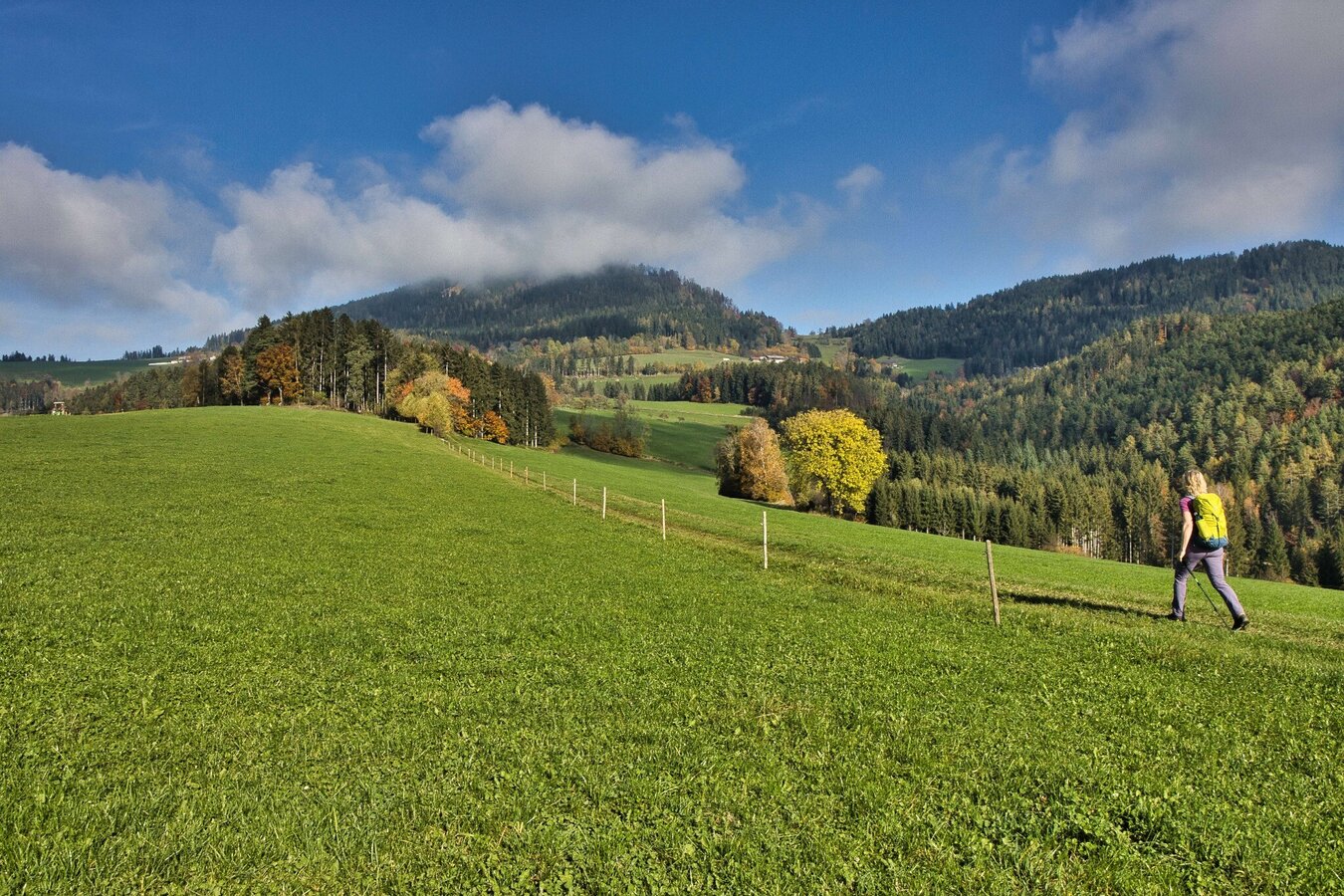
IMG_2573.jpg | © Weges OG | Weges OG
8/10
IMG_2604.jpg | © Weges OG | Weges OG
9/10
IMG_2663.jpg | © Weges OG | Weges OG
10/10

What the weather will be like Peggau (401m)
Today, 23.10.2026
The day starts sunny, but will be partly cloudy in the afternoon.Morning

2°C
sr.Regenwahrscheinlichkeit
0%
sr.Windstärke
5 km/h
Noon

12°C
sr.Regenwahrscheinlichkeit
0%
sr.Windstärke
5 km/h
Night

7°C
sr.Regenwahrscheinlichkeit
5%
sr.Windstärke
0 km/h
Tomorrow, 24.10.2026
Heavy rain in the morning, drying up in the afternoon.Morning

6°C
sr.Regenwahrscheinlichkeit
85%
sr.Windstärke
5 km/h
Noon

10°C
sr.Regenwahrscheinlichkeit
60%
sr.Windstärke
5 km/h
Night

6°C
sr.Regenwahrscheinlichkeit
20%
sr.Windstärke
5 km/h
Forecast
25.10.2026
1°C
11°C
26.10.2026
3°C
15°C
27.10.2026
3°C
15°C

