


Schlossberg Graz
Viewpoint and green heart of the city
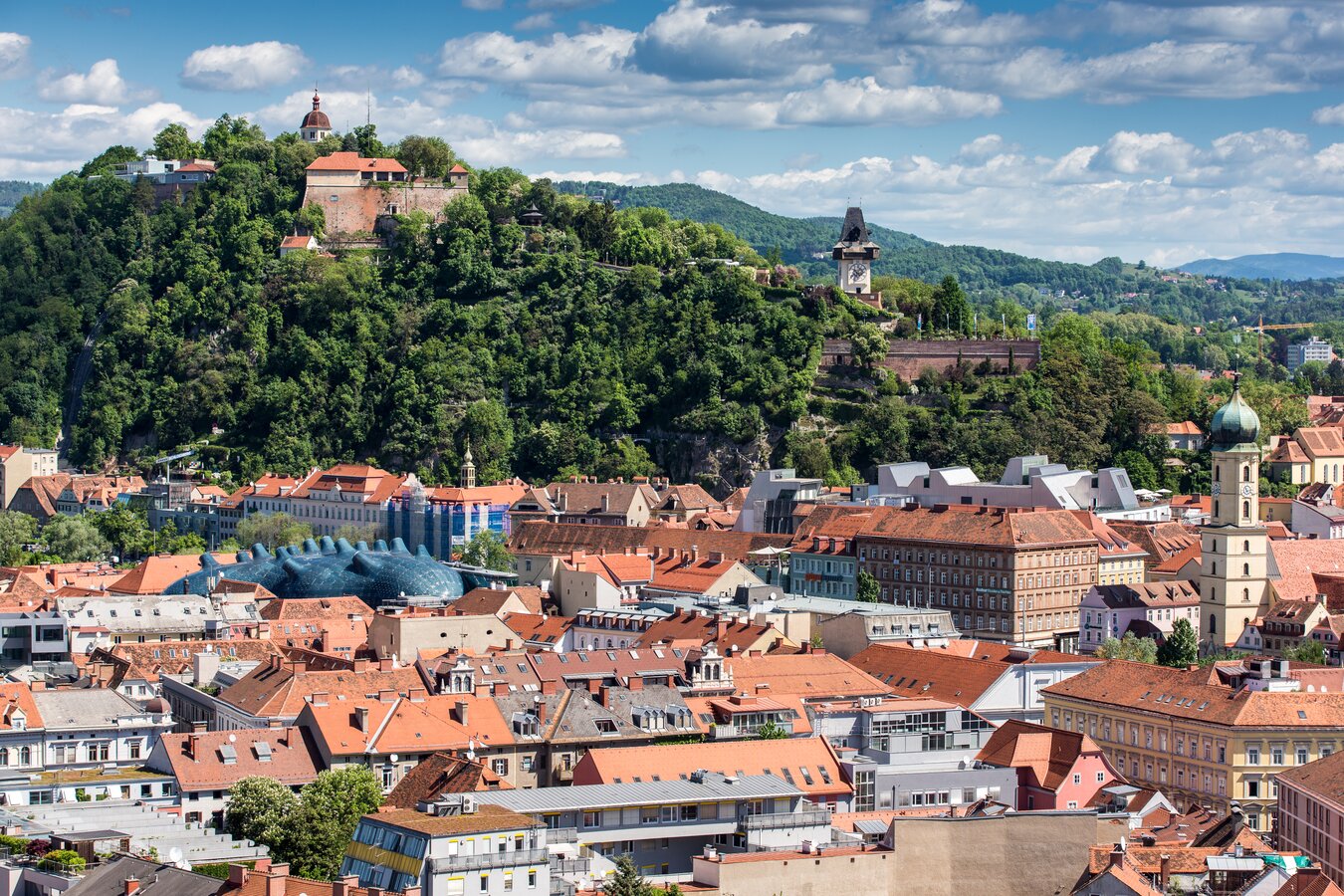
Rising at the centre of the historic city, the Schlossberg has shaped Graz for more than a thousand years. Wooded and accessible, it opens wide views across the red rooftops of the old town and towards the surrounding hills. The Clock Tower, with its distinctive reversed hands, is more than a motif — it serves as both symbol and point of identification.
Schlossberg Graz at a glance
- Location: directly above Graz’s Old Town
- Elevation: approx. 123 meters above the main square
- Landmark: Clock Tower
- Access: on foot, Schlossbergbahn funicular, Schlossberglift
- Highlights: Graz Museum Schlossberg, slide, fairytale train, The Flight Graz 4D
- Dining: Schlossberg restaurant, beer garden, Starcke Haus, Aiola Upstairs
Origins and city hill
The name Graz derives from the Slavic “Gradec” — meaning “small castle”. A fortified structure stood here as early as the Middle Ages. In the 16th century, the Schlossberg was expanded into a significant fortress. After Napoleon’s victory in 1809, the fortifications were dismantled — the Clock Tower and the Bell Tower were bought back by the citizens of Graz. Today, the Schlossberg is publicly accessible with its viewing terraces.
- Height: approx. 123 metres above the Hauptplatz
- First documented mention: 12th century
- Expansion into a fortress: 16th century
- Demolition of the fortifications: 1809, following the Napoleonic Wars
- Transformation into a public park: from 1839, initiated by Ludwig von Welden
The Schlossberg embodies both origin and present.
Experiences on the Schlossberg
Culture, leisure and culinary culture
The Schlossberg offers more than views. Between historic walls and parkland, spaces emerge for culture, encounter and culinary experience.
The Clock Tower
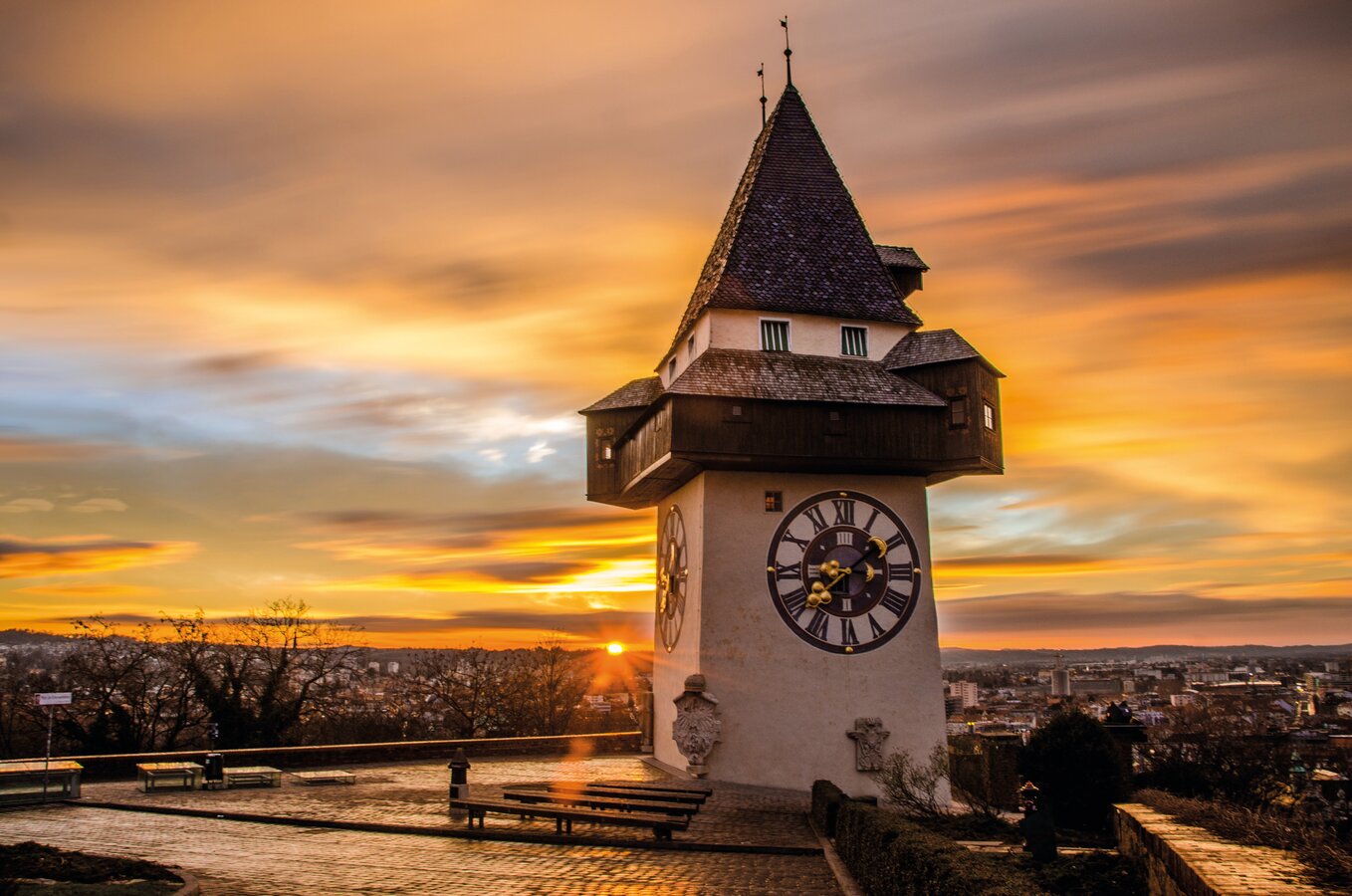
The Clock Tower was first documented in the 13th century. Its reversed hands remain distinctive: the large hand indicates the hours, the smaller the minutes — a remnant from the time when only the hour hand existed.
The oldest bell dates back to 1382. From the former rampart walkway, wide views open across the rooftops of Graz.
- Height: 28 metres
- First documented mention: 13th century
- Clock mechanism: in operation since 1712
- Oldest bell: 1382
- Distinctive feature: the large hand shows the hours
Views across Graz
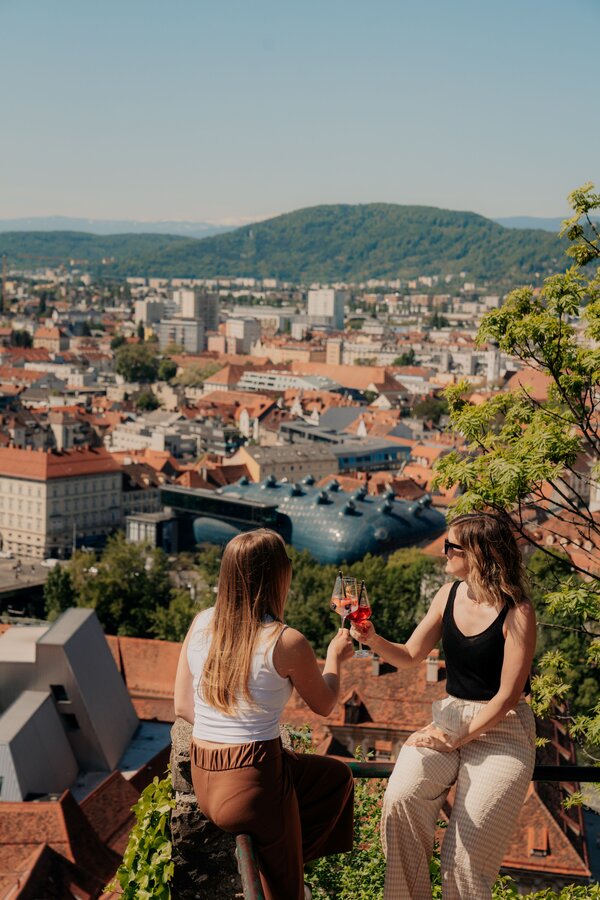
The Schlossberg is a green retreat at the centre of the city. Mature trees and shaded paths lead through historic walls just a few steps above the UNESCO-listed old town.
From several viewpoints, the gaze extends across the rooftops of Graz and into the surrounding landscape — particularly atmospheric in the evening.
Shifting light and shadow, the contrast between city sounds and wind in the trees, make the Schlossberg a place that allows for both movement and pause.
Fortress and defence
At the centre of the summit plateau lies the 16th-century cistern. With a capacity of 900,000 litres, it secured the fortress’s water supply. The 94-metre-deep Turkish Well, the substantial Stallbastei and large sections of the fortifications were designed by Domenico dell’ Aglio.
The Gothic Gate once connected the rear zwinger with the interior of the medieval fortress. Today, a viewing terrace opens here towards the city.
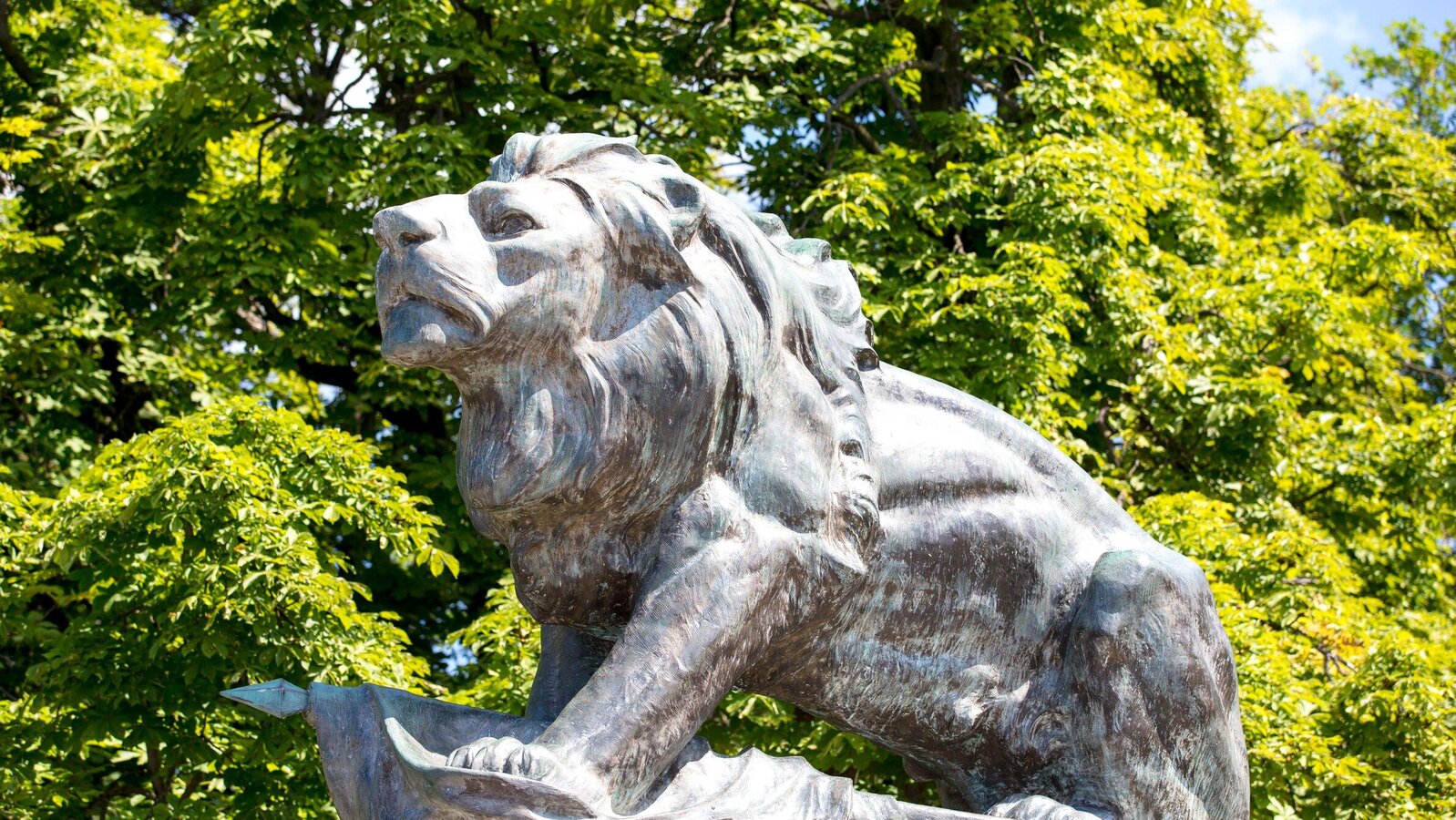
The Hackher Lion commemorates Major Franz Xaver Freiherr von Hackher, who in 1809 resisted the French forces for months with a small unit. As no portrait of him survives, a lion was erected in his honour — a symbol of courage and steadfastness.
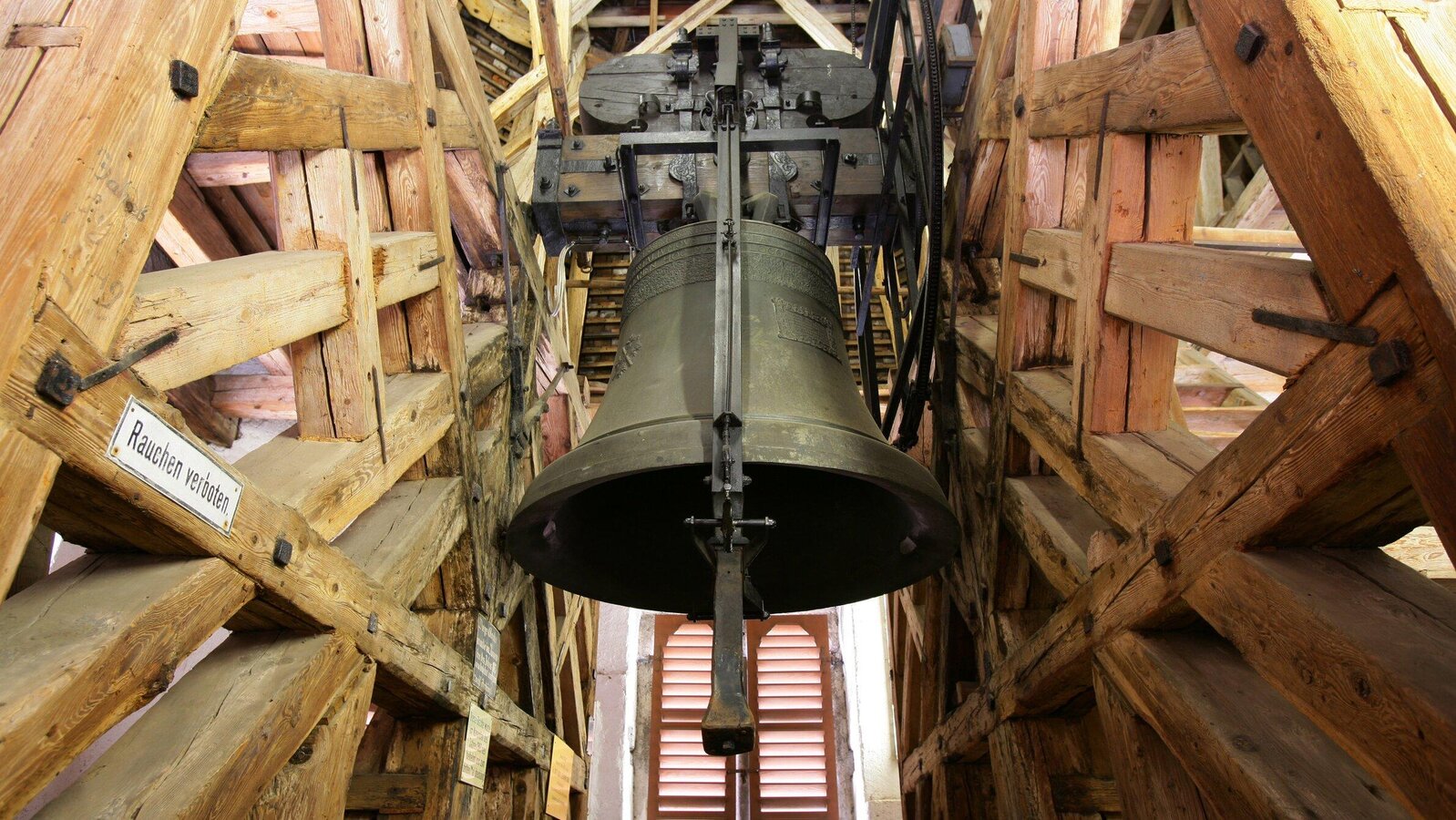
Bell Tower & “Liesl”
Built in 1588, the Bell Tower rises 34 metres above the Schlossberg. Within it hangs the city’s most renowned bell: the “Liesl”.
Weighing nearly five tonnes, it could only be set in motion after two blacksmiths devised a new ringing mechanism. The origin of its name remains uncertain — possibly linked to a former St Elizabeth chapel, perhaps derived from the word Verlies (dungeon). The vaulted cellar once housed the most feared prison of the fortress.
Today, together with the Clock Tower, the Bell Tower shapes the silhouette of the Schlossberg — a quiet landmark with a resonant history.
Chinese Pavilion & Turkish Well
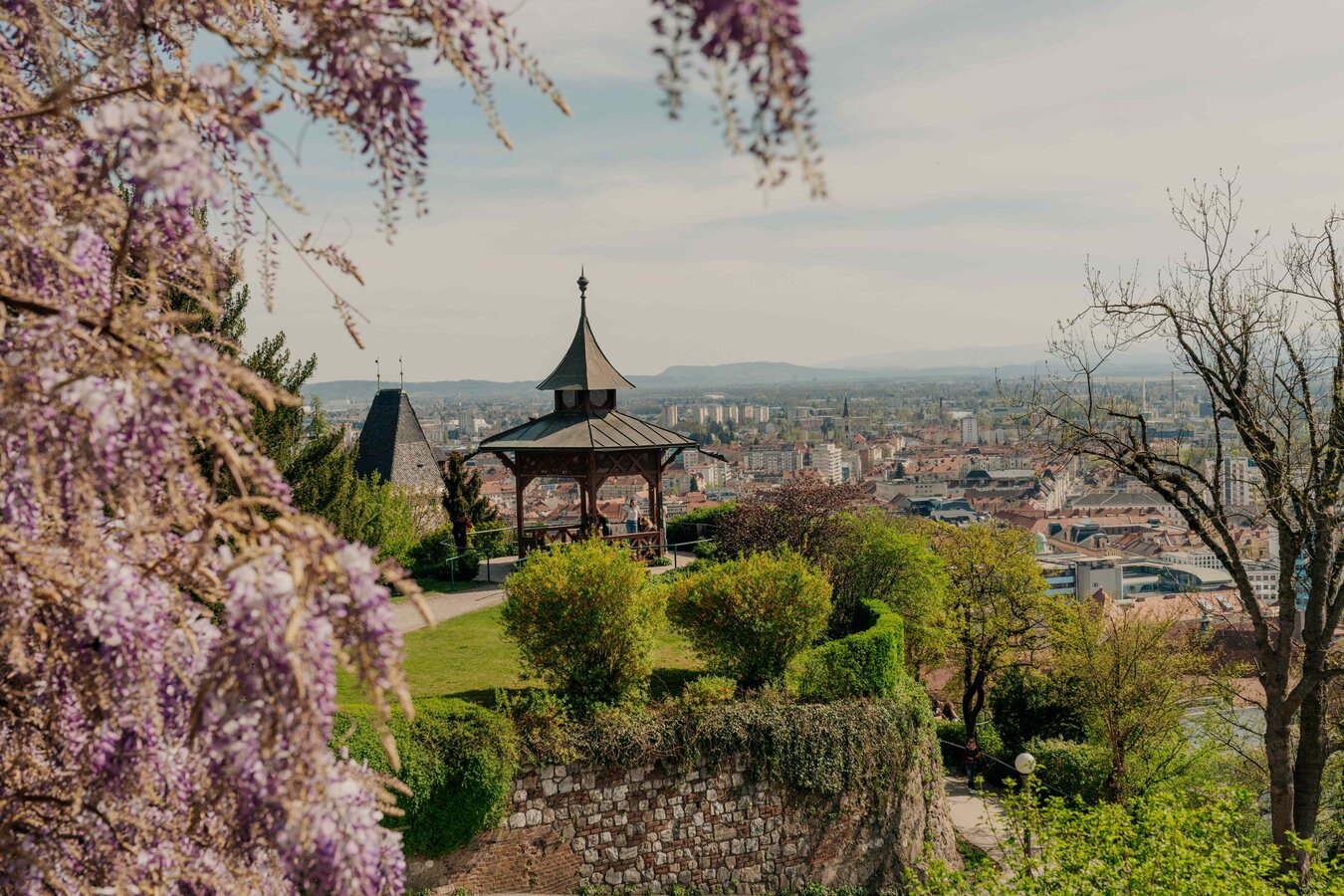
The Chinese Pavilion was built around 1890, replacing an earlier romantic vine arbour. With its delicate structure, it sets a deliberate contrast to the massive walls of the former fortress. Between paths and greenery, a quiet place opens for view and pause — almost suspended above the city.
Just a few steps away, the Turkish Well descends 94 metres into the rock. Created in the 16th century, it formed — together with the large cistern — part of the fortress’s vital water supply. Its name recalls the period of the Ottoman wars; its precise origin, however, remains uncertain to this day.
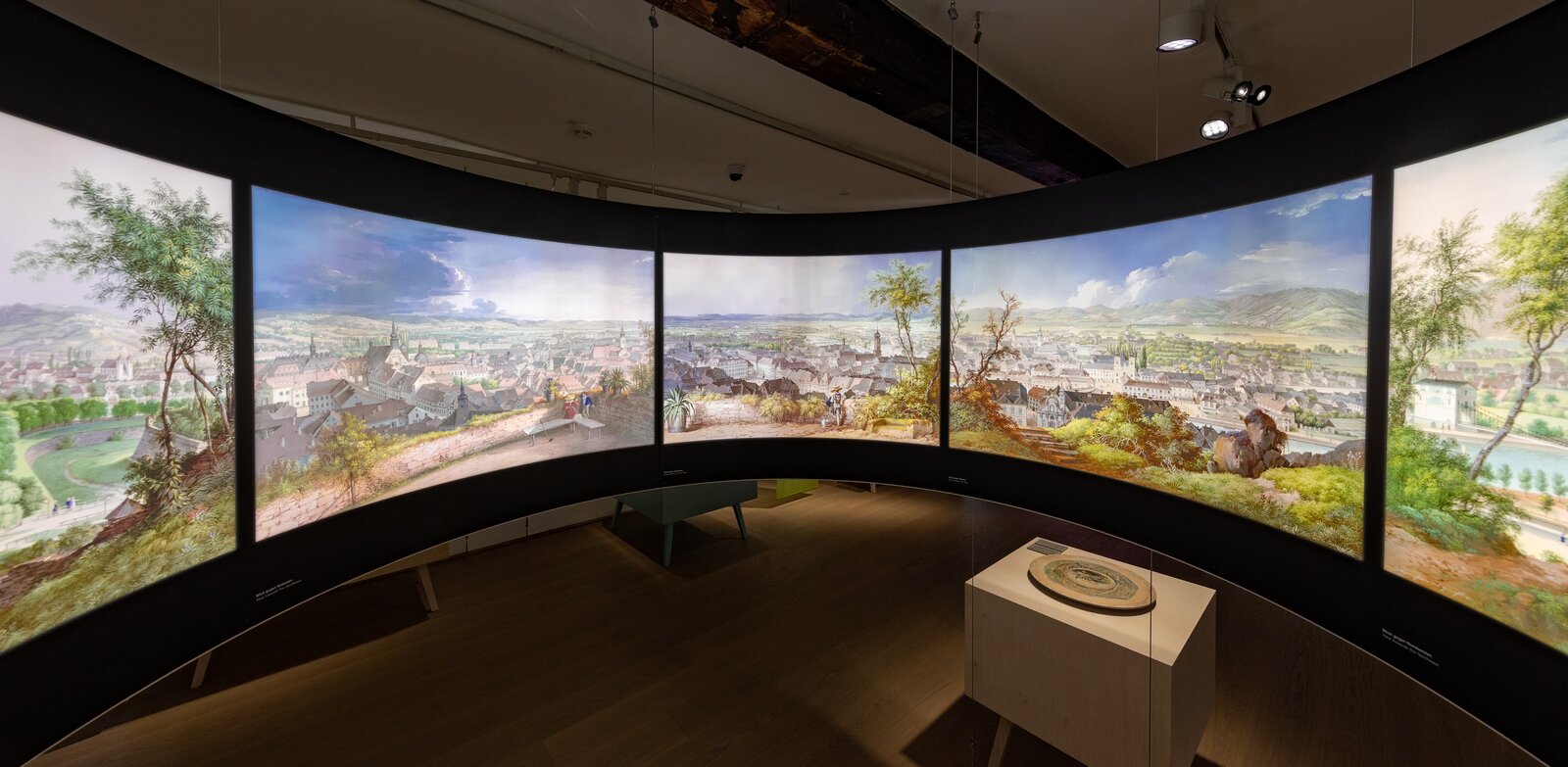
Graz Museum Schlossberg
The museum within the former fortress grounds traces the history of the city hill — from the medieval castle to its dismantling in 1809 — presented in a compact and multimedia format. Models, projections and original artefacts make the development of the Schlossberg comprehensible and offer insight into its strategic significance.
In this way, the stone walls become a living space of memory — clearly interpreted and layered in experience.
Herbersteingarten
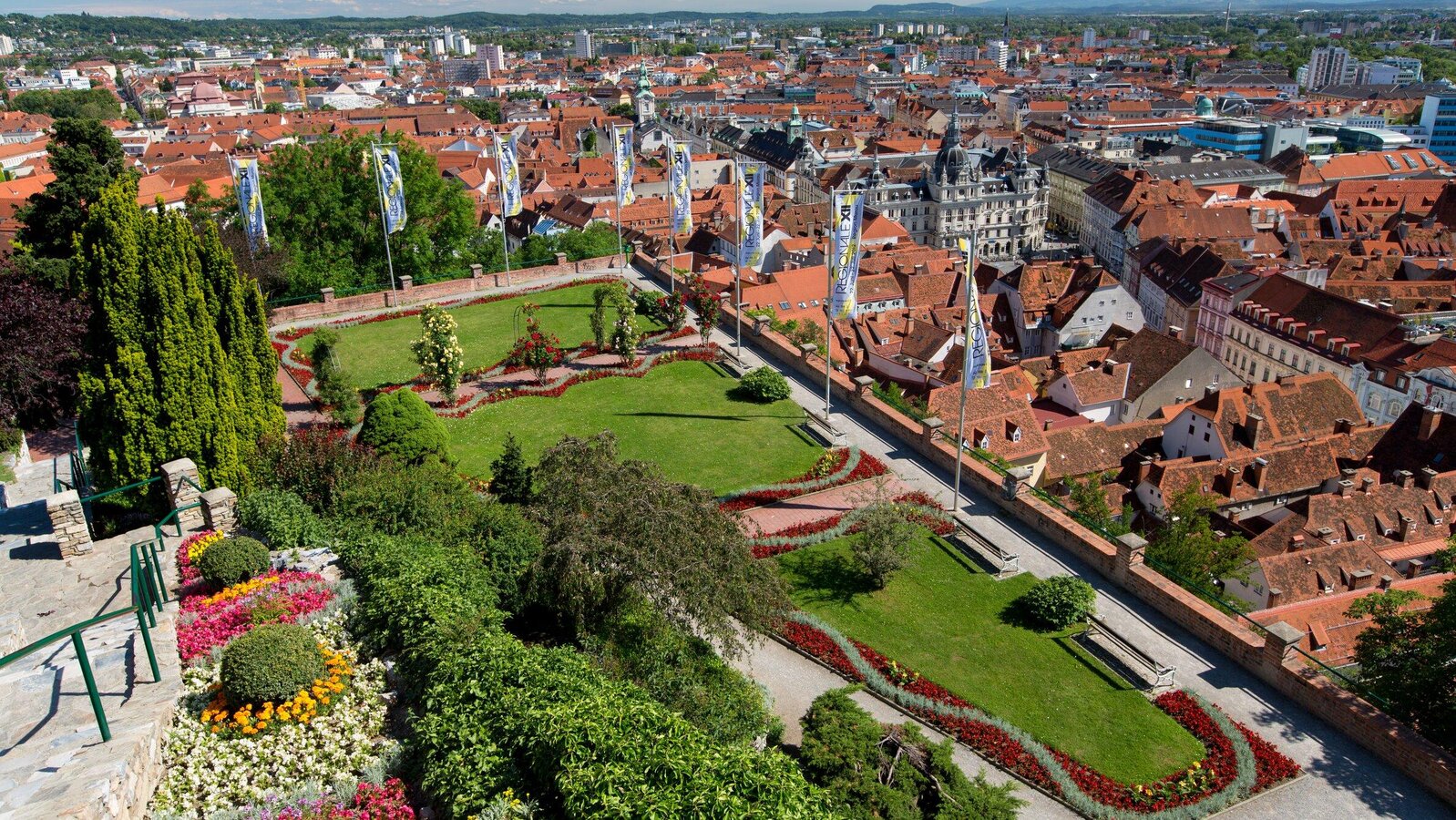
Terraces upon terraces, Mediterranean greenery and views across the city’s rooftops: the Herbersteingarten is among the quieter highlights of the Schlossberg.
In 1930, the garden was made accessible from the so-called “Kriegssteig”. Its terraced design from the interwar period combines southern plant varieties with a clear architectural structure. Fig, lemon and ginkgo trees grow here alongside abundant wisteria, which in spring washes the walls in violet.
The Herbersteingarten feels almost like a southern courtyard — open to the city, yet sheltered. A place where history, garden design and outlook converge with quiet ease.
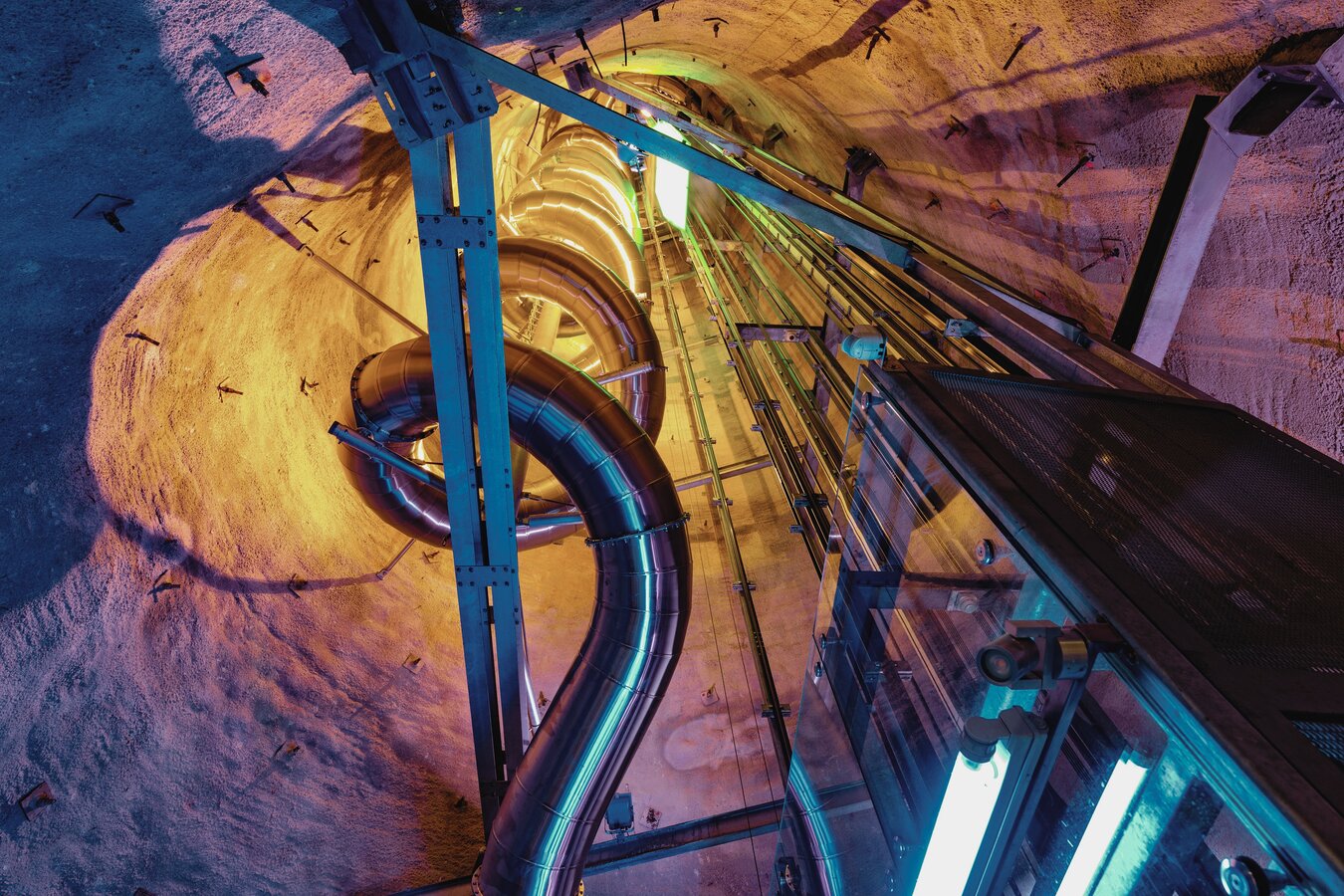
Slide Graz, Märchenbahn, The Flight Graz 4D
The 170-metre slide descends through the rock. In a swift ride, it leads through the interior of the Schlossberg — a shift in perspective that makes the historic hill tangible in a playful way.
The "Grazer Märchenbahn", a fairytale train, connects the extensive tunnel system with carefully staged stories and imaginative figures. Through light, sound and narration, an experience unfolds for families — engaging, atmospheric and slightly mysterious.
With The Flight Graz 4D, a cinematic aerial journey complements the offer within the hill. In around ten minutes, the city centre of Graz appears from an unusual perspective. Moving seats and subtle effects enhance the sense of motion and space.
Beer gardens & restaurants
On the Schlossberg, cuisine meets panorama — calm, urban and with wide views across Graz. Regional dishes, seasonal ingredients and a glass of Styrian wine are part of the experience, as is the sense of sitting above the city while remaining at its centre.
The Schlossberg Restaurant comprises Restaurant SCHLOSSBERG, SkyBar Graz and the beer garden — three settings, one shared view across the city. Classic cuisine, bar culture and a relaxed atmosphere come together here.
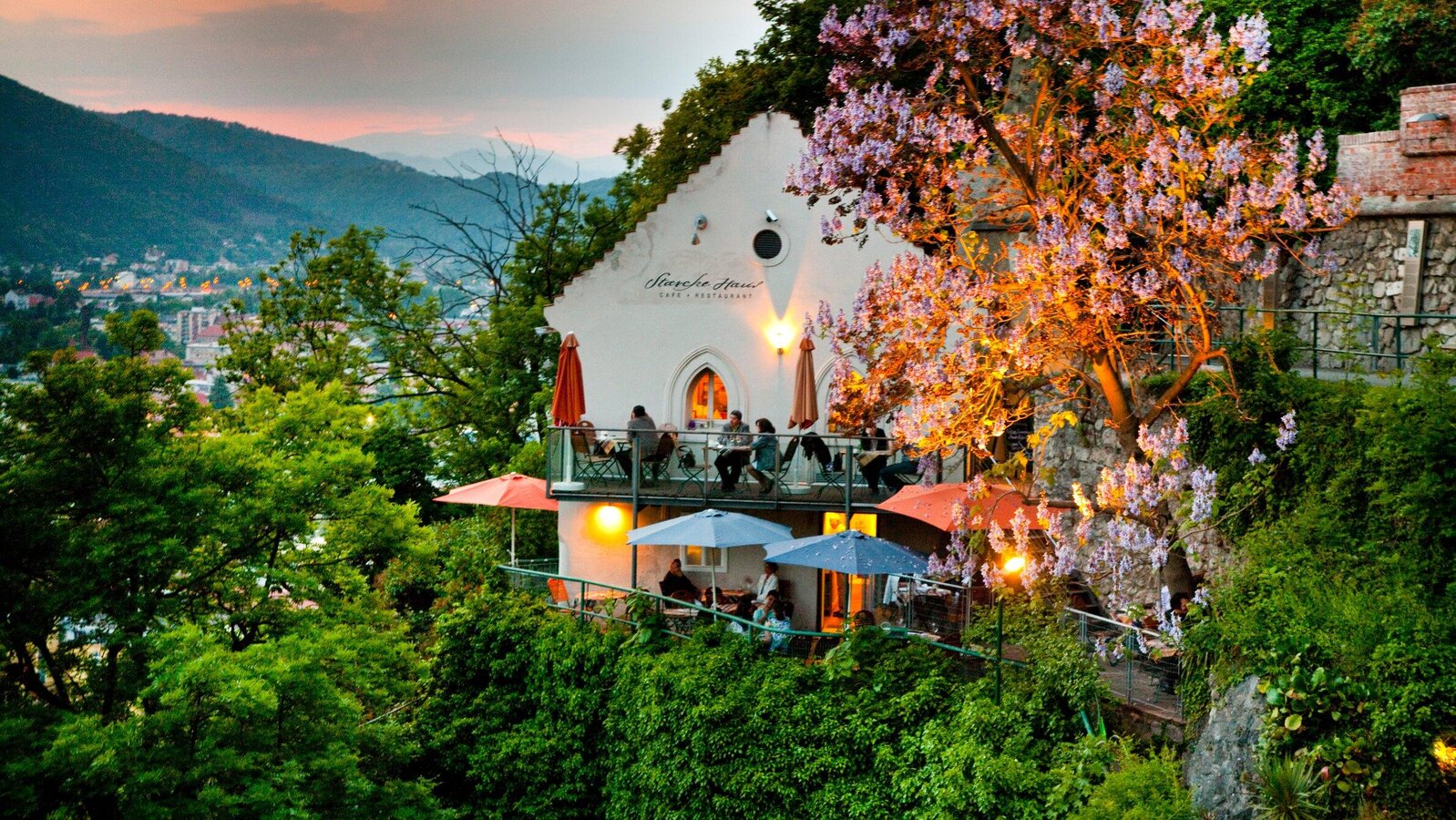
Starcke Haus combines historic walls with refined cooking and terraces above the rooftops of Graz. Aiola Upstairs stands for contemporary architecture, breakfast culture and long evenings with an open view.
Reaching the Schlossberg
Access at a glance


Schlossberg and Clock Tower: FAQs
The Schlossberg rises around 123 metres above the Hauptplatz and offers several publicly accessible viewpoints across the city.
Originally, the tower clock had only a large hour hand. When a minute hand was added later, the hour hand remained the larger of the two — which is why the display appears “reversed” today.
Access to the Schlossberg on foot is free of charge. Fees apply for the funicular, the lift and selected attractions or events.
The area around the Clock Tower is freely accessible. The interior of the tower itself is not permanently open to the public.
For a walk, the viewpoints and a brief pause for photographs, allow around one to one and a half hours. For events or a visit to the Kasematten, plan additional time accordingly.
Schlossberg can be reached on foot, via the Schlossbergbahn funicular, or by the Schlossberglift. The most direct route is the Schlossberg staircase with around 260 steps. For a more comfortable option, the funicular and the barrier-free lift take visitors quickly to the viewpoints and the Clock Tower.
At Schlossberg, visitors can see the Clock Tower, enjoy panoramic views over Graz, stroll through park areas, and explore the history of the former fortress. Popular attractions include the Graz Museum Schlossberg, the Schlossberg slide, the Graz fairytale train, The Flight Graz 4D, and restaurants with a view.
Yes, there are several dining options on Schlossberg with views over the city, including the Schlossberg restaurant with SkyBar, Starcke Haus, and Aiola Upstairs. Schlossberg combines scenic views and history with a distinctive culinary experience above the rooftops of Graz.
The Liesl is the famous bell in the Clock Tower on Graz’s Schlossberg. The bell tower was built in 1588 and stands 34 metres tall, while the Liesl itself weighs just under five tonnes. The origin of its name is not clearly known – it may refer to a former St. Elizabeth chapel or to the word “Verlies” (dungeon), as a prison once existed in the cellar vaults.
Yes, during the Advent season, the Aufsteirern Christmas market takes place on Schlossberg. It is set above the rooftops of Graz, around the casemates, the Liesl bell tower, and other Schlossberg areas. In 2026, it is planned from 20 November to 20 December, taking place on Fridays, Saturdays, and Sundays. Dates and opening hours should be checked again closer to the season.
Schlossberg by day and at night

© Harry Schiffer Photodesign | HARRY SCHIFFER PHOTODESIGN
1/6

Graz Schlossberg in autumn | © TV Erlebnisregion Graz | Harry Schiffer
2/6

Clock Tower Graz | © Graz Tourismus | Tom Lamm
3/6

© Sebastian Reiser
4/6

© Graz Tourismus | Werner Krug
5/6

Winter at Schlossberg overlooking Graz | © Graz Tourismus | Harry Schiffer
6/6


