


Schloss Eggenberg
in Graz
Baroque masterpiece and UNESCO World Heritage Site
Eggenberg Palace in Graz is one of the most significant baroque palaces in Austria and part of the UNESCO World Heritage Site. The complex brings together architecture, state rooms and palace gardens in a coherent overall concept. Its symbolic system of numbers translates the baroque understanding of time and the order of the world into built form.
Eggenberg Palace Graz: Overview
- Baroque ensemble combining architecture, state rooms and palace park – shaped by a clear symbolic concept
- Built in the 17th century as an expression of power, order and a cosmological worldview
- Unique numerical architecture with 365 windows and 24 state rooms reflecting time and the universe
- More than 500 ceiling paintings form an exceptionally cohesive baroque spatial artwork
- Palace park with expansive landscape – open year-round and quietly located on the western edge of Graz
- Awarded the 2026 “Museums + Heritage Award” for the exhibition “Staging the World” as part of the Styrian Exhibition 2025
Origins and architecture
A cosmological programme in stone
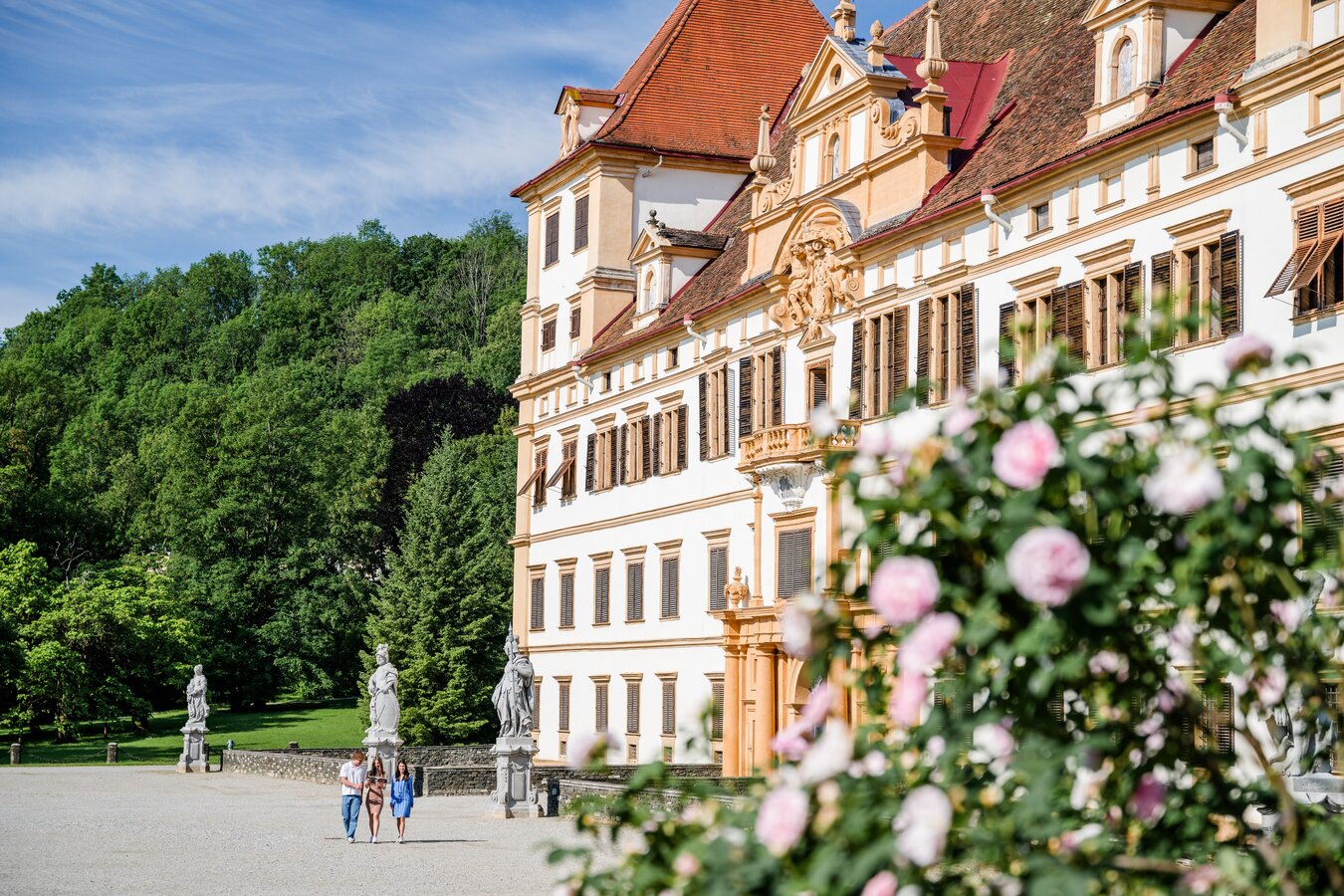
Built in the 17th century for the princely Eggenberg family, the palace combines representative architecture with symbolic precision. The complex is laid out in strict symmetry, with four corner towers framing the main structure.
Particularly notable are the preserved state rooms with their original interiors. More than 500 ceiling paintings form a singular work of spatial art, distinguished by its remarkable state of preservation.
A universe conceived in stone.
Numbers & history
The symbolism of time
The architecture follows a clear numerical system:
- 365 exterior windows — one for each day of the year
- 31 rooms per floor
- 24 state rooms at the centre of the complex
- 4 corner towers as a sign of order

State rooms and museums
Art and history within the palace
Schloss Eggenberg combines baroque state rooms with significant collections of the Universalmuseum Joanneum. The historic interiors themselves form the setting of the exhibition.


Eggenberg park & gardens
Garden design and open space
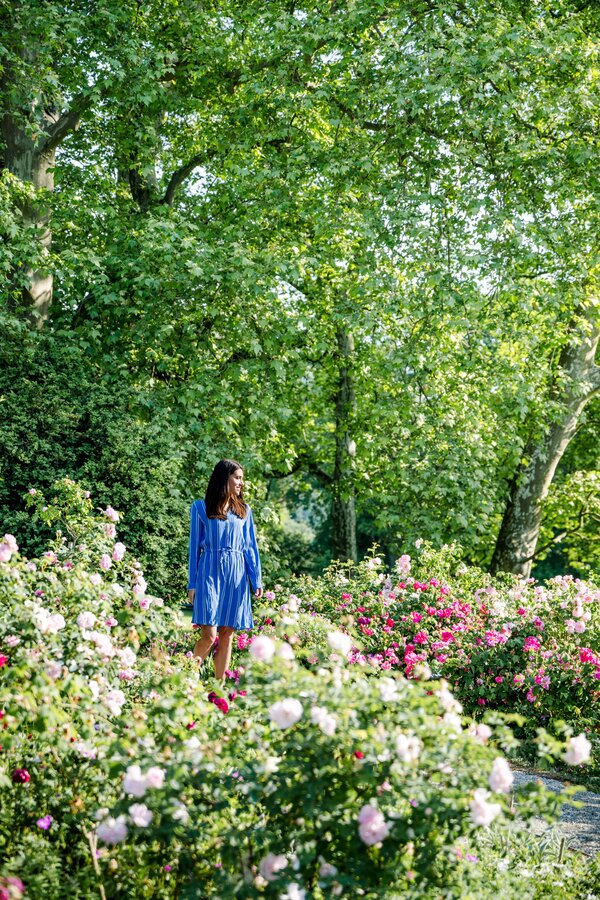
The Eggenberg park combines baroque design principles with a sense of landscape openness. Originally conceived as a formal ornamental garden, it was redesigned in the 19th century as an English landscape garden.
Mature tree avenues, broad lawns and defined sightlines continue to shape the grounds today. Free-roaming peacocks lend the park a distinct atmosphere, making a walk around the palace a calm counterpoint to the city.
Planning your visit
Opening hours and access
Schloss Eggenberg is located in the western part of Graz and can be reached easily by public transport, bicycle or car.
The state rooms and museums are open seasonally, generally from spring to autumn. The palace park is accessible throughout the year. Current opening hours and admission details are available on the website of the Universalmuseum Joanneum.

Eggenberg Palace in Graz with baroque main facade | © Graz Tourismus | Harry Schiffer
1/6

Peacock in Eggenberg Palace Park in Graz | © Graz Tourismus | Mias Photoart
2/6

State room with porcelain decor in Eggenberg Palace in Graz | © Graz Tourismus | Mias Photoart
3/6

Historic chandelier in Eggenberg Palace in Graz | © Graz Tourismus | Mias Photoart
4/6

Eggenberg Palace Park in Graz from above | © Graz Tourismus | Mias Photoart
5/6

Porcelain decor in Eggenberg Palace in Graz | © Graz Tourismus | Mias Photoart
6/6
Schloss Eggenberg: FAQs
Schloss Eggenberg forms part of the UNESCO World Heritage site “City of Graz – Historic Centre and Schloss Eggenberg”. Decisive factors include its baroque overall concept with its symbolic architecture and its historical connection to Graz’s old town.
The historic state rooms can only be accessed as part of a guided tour, preserving the integrity of the Baroque ensemble.
Allow around two to three hours for the state rooms and museums. The palace park can be explored independently in addition.
The palace park is open to the public, though admission is subject to a fee. A visit is also possible without joining a guided tour of the state rooms.
The state rooms and museums are open seasonally, generally from spring to autumn (Tuesday to Sunday). Current opening hours and admission prices are available on the website of the Universalmuseum Joanneum.
The palace park is accessible without barriers. Parts of the museums can also be reached step-free. Owing to the historic structure of the building, the state rooms are only accessible to a limited extent. Detailed information on accessibility is available on the website of the Universalmuseum Joanneum.
Eggenberg Palace is easily accessible by tram:
Tram line 1 towards Eggenberg/UKH – stop: Eggenberg Palace
Tram line 7 towards Wetzelsdorf – stop: Eggenberger Allee
From both stops, it is only a short walk to the palace grounds.
Travel time from Graz city centre is approximately 15 minutes.
Public parking is available along the street. A valid parking ticket is required.


