


Stage 02 Hemma Pilgrimage Route Lassing-Donnersbachwald
Characteristics
SkillThe tour in numbers
Level of difficulty
challenging
Route
34,3 km
Time
9:30 h
Uphill
619 hm
Downhill
424 hm
Highest point
1031 m
Under the patronage of Saint Hemma, today’s route leads from Lassing along the so-called “Schattenberg Hiking Trail” through the villages of Wieden, Schattenberg, Ödstein, and Stein to Döllach. Our next destination is Irdning. To reach our stage destination in Donnersbachwald, we follow hiking trail no. 4. Upon arriving at the church, it is time to say: Bravo, you made it!
Saint Hemma was born around 980 as Countess of Friesach-Zeltschach. Her charity work and numerous foundations made her widely known among the local population. With her wealth, she founded the Benedictine monasteries of Gurk and Admont.
Irdning, a picturesque village at the foot of the mighty Grimming mountain, was first mentioned in 1140 as “Idenich”. The Church of Saints Peter and Paul was documented in 1145 and is one of the oldest churches in the upper Enns Valley. The parish, originally subordinate to the former canons’ monastery of Rottenmann, was first mentioned in 1151 and once counted two later popes, Pius II and Pius III, among its parish priests. Most of the church furnishings date from the 17th and 18th centuries. Falkenburg Hunting Lodge in Irdning was built in 1615. Count Sigismund Welsersheim donated the castle to the Capuchins and had it converted into a monastery in 1711. Today, Falkenburg serves as a retreat centre.
An important historic trade route once connected the Enns Valley with the Mur Valley via the Glattjoch pass. Schloss Donnersbach, visible from afar, stands on a steep hill above the village of the same name. The castle consists of two wings connected by an archway. The castle church of Saint Giles, integrated into the main wing, was expanded in 1786 and elevated to parish church status. Parts of the former fortifications, including sections of the moat and ring wall, are still preserved.
Nestled in the mountains of the Niedere Tauern, Donnersbachwald lies at an altitude of 1,000 metres in the upper Donnersbach Valley. The parish church of Saint Leonard was built in 1753/54 on the orders of Empress Maria Theresa, who is said to have known and appreciated the area personally. Until then, the villagers had to make the long journey to Irdning to attend Sunday Mass. The high altar features a depiction of the Virgin Mary with Child, flanked by Saints Leonard and Patrick. The altar painting was created by the renowned Rococo painter Johann Josef Karl Henrici. The side altar contains the revered image “Mary of Good Counsel”.
Irdning, a picturesque village at the foot of the mighty Grimming mountain, was first mentioned in 1140 as “Idenich”. The Church of Saints Peter and Paul was documented in 1145 and is one of the oldest churches in the upper Enns Valley. The parish, originally subordinate to the former canons’ monastery of Rottenmann, was first mentioned in 1151 and once counted two later popes, Pius II and Pius III, among its parish priests. Most of the church furnishings date from the 17th and 18th centuries. Falkenburg Hunting Lodge in Irdning was built in 1615. Count Sigismund Welsersheim donated the castle to the Capuchins and had it converted into a monastery in 1711. Today, Falkenburg serves as a retreat centre.
An important historic trade route once connected the Enns Valley with the Mur Valley via the Glattjoch pass. Schloss Donnersbach, visible from afar, stands on a steep hill above the village of the same name. The castle consists of two wings connected by an archway. The castle church of Saint Giles, integrated into the main wing, was expanded in 1786 and elevated to parish church status. Parts of the former fortifications, including sections of the moat and ring wall, are still preserved.
Nestled in the mountains of the Niedere Tauern, Donnersbachwald lies at an altitude of 1,000 metres in the upper Donnersbach Valley. The parish church of Saint Leonard was built in 1753/54 on the orders of Empress Maria Theresa, who is said to have known and appreciated the area personally. Until then, the villagers had to make the long journey to Irdning to attend Sunday Mass. The high altar features a depiction of the Virgin Mary with Child, flanked by Saints Leonard and Patrick. The altar painting was created by the renowned Rococo painter Johann Josef Karl Henrici. The side altar contains the revered image “Mary of Good Counsel”.
Best season
January
February
March
April
May
June
July
August
September
October
November
December
More information
Detailed information on how to get to xxx can be found here.
Parking is available at the primary school or by the bathing lake.
Starting from Lassing, the Hemma Trail leads to Treschmitz and then follows hiking trail no. 6 – the so-called “Schattenberg Hiking Trail” – through the villages of Wieden, Schattenberg, Ödstein, and Stein to Döllach. From there, the route continues almost flat along the road, initially briefly towards Liezen. After the Egger timber works, we keep left and follow a stream to the Enns Cycle Path. We then turn left and continue upstream along the cycle and running trail beside the Enns River to the footbridge at Wörschach and onwards to Irdning, where the “Schwarzer Weg” branches off. Here, the trail leaves the river and leads into the village via a gently ascending gravel road to the church of Irdning.
From the market square in Irdning, we can walk up Klostergasse to the Capuchin monastery. We then return to the road leading uphill towards Winklern. In Winklern, we follow the signs for the “Römerlauf” trail up to Calvary Hill. The “Römerlauf”, or hiking trail no. 4, continues directly to the centre of Donnersbach. Pilgrims can collect their pilgrimage stamp at the parish church. The route from Donnersbach to Donnersbachwald takes around three hours and climbs steadily uphill along the road. After the avalanche protection tunnel, we turn right behind the Lehmbacher farmstead, cross the Donnersbach stream via a wooden bridge, and follow the gently ascending trail no. 3 to Fössner and then left towards Hoanz. Finally, hiking trail no. 2 leads past the Mörsbacherhof and Pension Purkhardt. Behind the guesthouse, we turn right and continue to the church of Donnersbachwald.
Informations about the whole Hemma Pilgrimage Trail
From the market square in Irdning, we can walk up Klostergasse to the Capuchin monastery. We then return to the road leading uphill towards Winklern. In Winklern, we follow the signs for the “Römerlauf” trail up to Calvary Hill. The “Römerlauf”, or hiking trail no. 4, continues directly to the centre of Donnersbach. Pilgrims can collect their pilgrimage stamp at the parish church. The route from Donnersbach to Donnersbachwald takes around three hours and climbs steadily uphill along the road. After the avalanche protection tunnel, we turn right behind the Lehmbacher farmstead, cross the Donnersbach stream via a wooden bridge, and follow the gently ascending trail no. 3 to Fössner and then left towards Hoanz. Finally, hiking trail no. 2 leads past the Mörsbacherhof and Pension Purkhardt. Behind the guesthouse, we turn right and continue to the church of Donnersbachwald.
Informations about the whole Hemma Pilgrimage Trail
Emergency
call mountain rescue: 140
Tips when
reporting an emergency – Answer these six WH questions: What happened? How
many people are injured? Where did the accident happen (are there GPS
coordinates)? Who is reporting the incident (callback number)? When did the
accident happen? What is the weather like at the site of the incident?
Proper backpack
packing makes many things easier: Pack heavy things first. The water bottle
should always be within reach in a side pocket. All the things that are often
needed, such as sunglasses, camera or hiking map, belong on top. An emergency
kit, including blister plasters, belongs in every rucksack and it is always
advisable to dress in layers.
Accessible by
train and bus: detailed information about arriving by ÖBB (Austrian Federal
Railways) can be found at www.oebb.at or
on the Verbundlinie Steiermark website www.busbahnbim.at
With
Verbundlinie’s BusBahnBim route planner app, planning your journey
has never been easier: simply enter towns and/or addresses, stop names or
points of interest to check all bus, train and tram connections in Austria. The
app is available free of charge for smartphones – on Google Play and in the App
Store
Steiermark Tourismus, Tel. +43 316 40030, www.steiermark.com
TV Schladming-Dachstein, Tel. +43 3687 23310, www.schladming-dachstein.at
Monika Gschwandner-Elkins: Hemma Pilgerwege, ARGE Pilgern in Kärnten, 9020 Klagenfurt, Freytag&Berndt und Artaria KG, 2008Map & downloads
Gallery
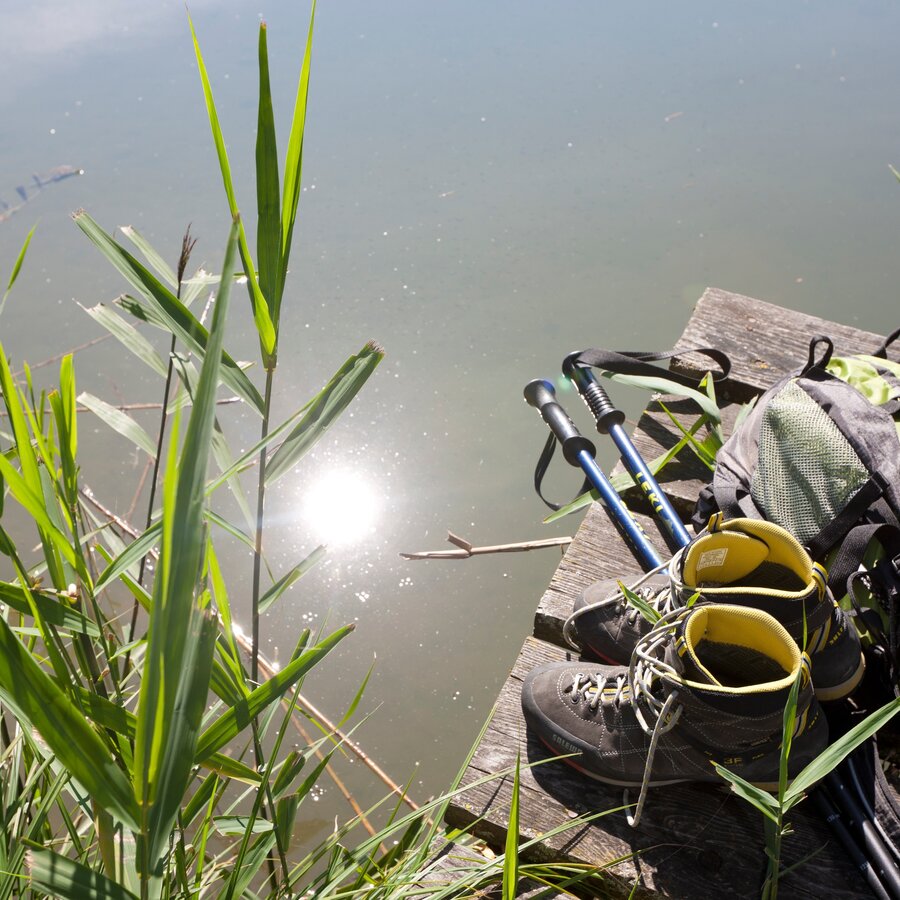
Steirisches Pilger-Stilleben | © Steiermark Tourismus | Harry Schiffer
1/6
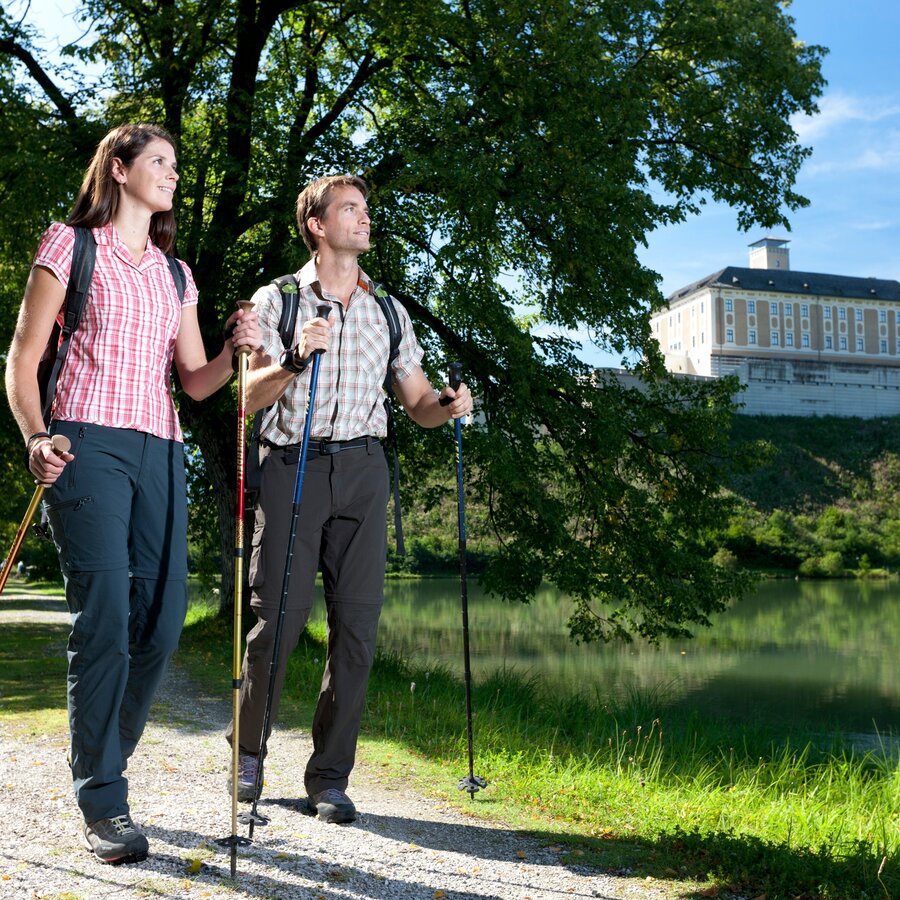
Im Angesicht des Schloss Trautenfels | © Steiermark Tourismus | Harry Schiffer
2/6
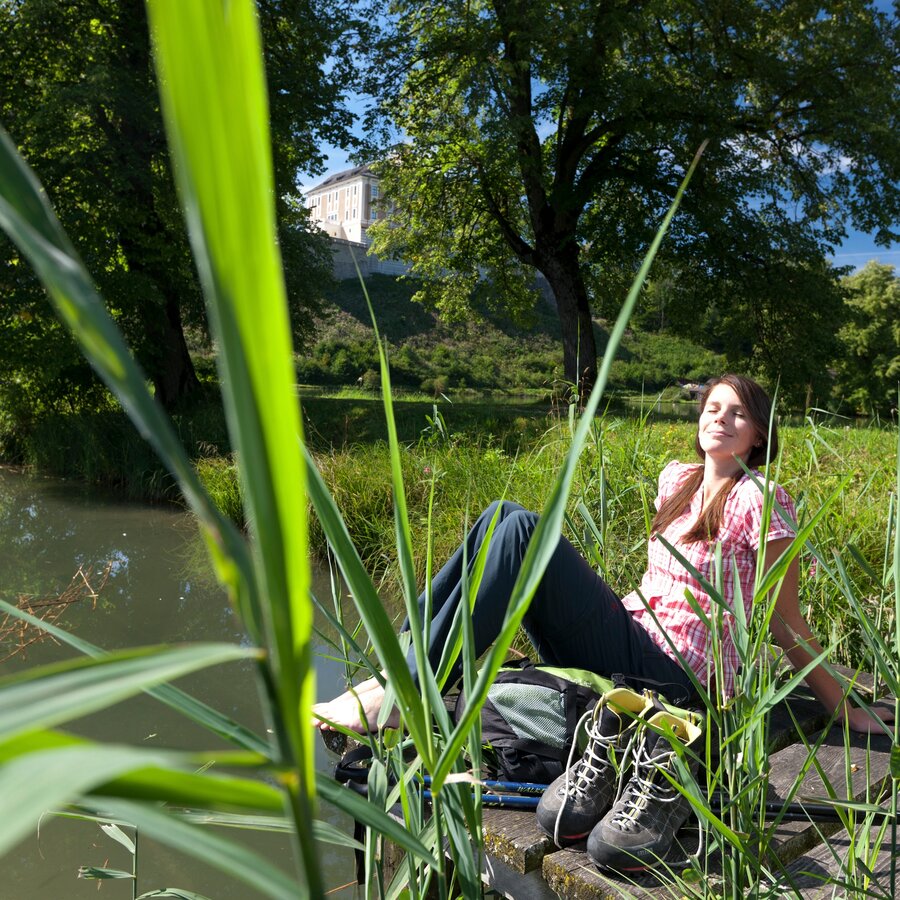
Rast am Wasser | © Steiermark Tourismus | Harry Schiffer
3/6
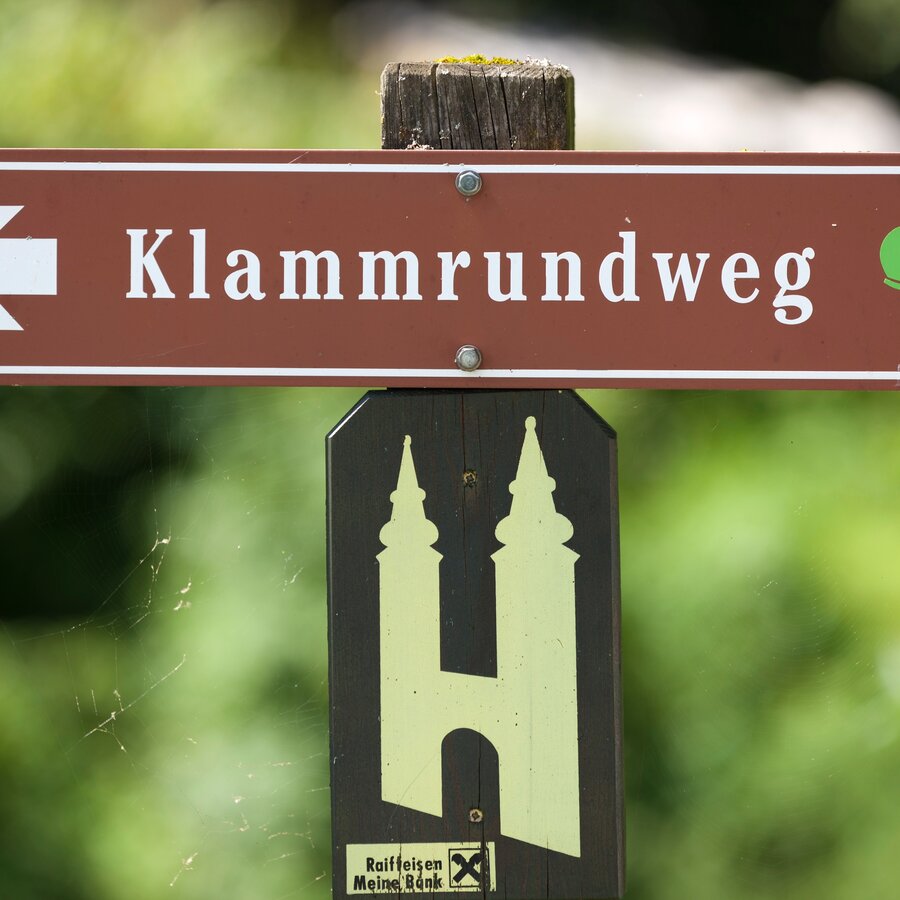
Eintritt in die Donnersbachklamm | © Steiermark Tourismus | Harry Schiffer
4/6
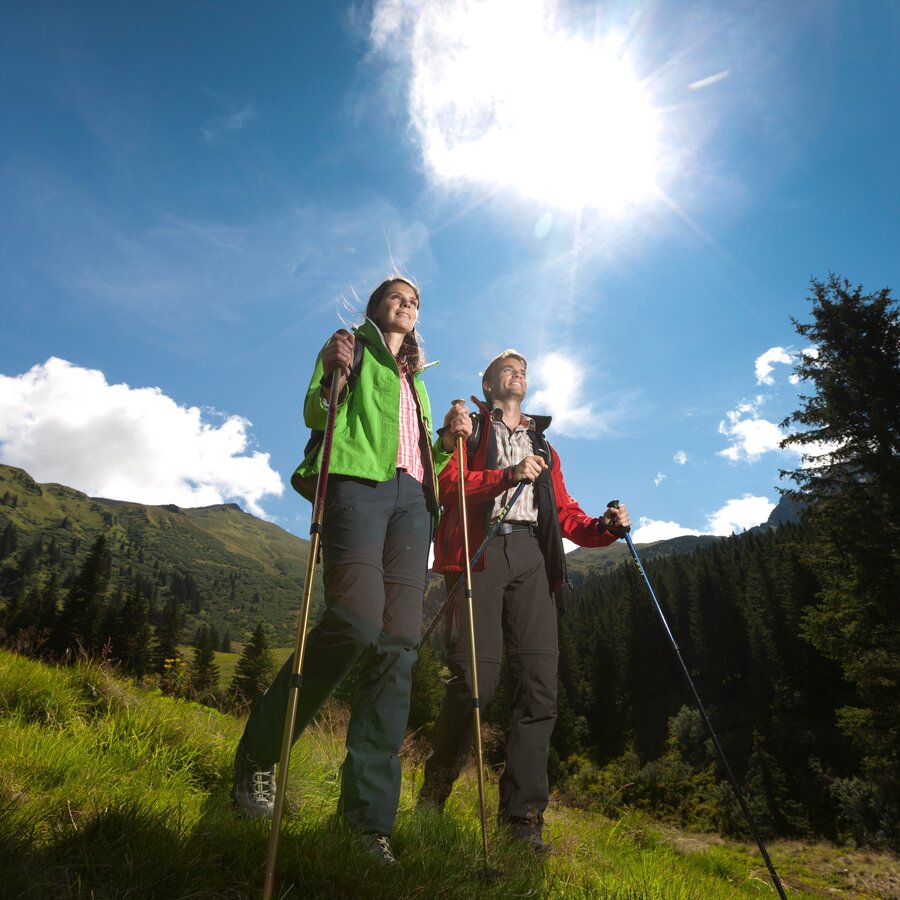
Im Donnersbachtal | © Steiermark Tourismus | Harry Schiffer
5/6
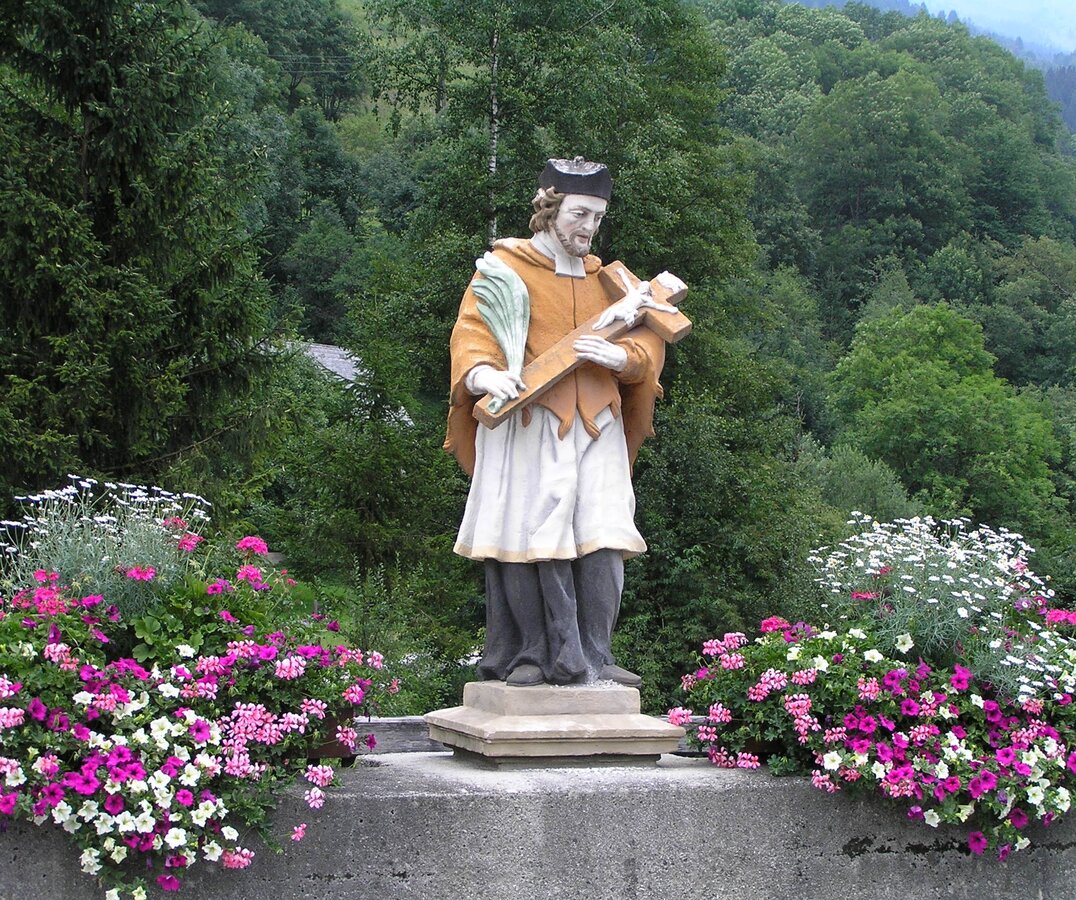
Donnersbach, Heiliger Nepomuk | © Monika Gschwandner-Elkins
6/6

What the weather will be like Lassing (774m)
Today, 23.10.2026
The day starts sunny, but will be partly cloudy in the afternoon.Morning

-2°C
sr.Regenwahrscheinlichkeit
0%
sr.Windstärke
0 km/h
Noon

10°C
sr.Regenwahrscheinlichkeit
0%
sr.Windstärke
10 km/h
Night
5°C
sr.Regenwahrscheinlichkeit
10%
sr.Windstärke
5 km/h
Tomorrow, 24.10.2026
Rainfall will end around noon, then the clouds will break up.Morning

3°C
sr.Regenwahrscheinlichkeit
85%
sr.Windstärke
5 km/h
Noon

7°C
sr.Regenwahrscheinlichkeit
75%
sr.Windstärke
10 km/h
Night

3°C
sr.Regenwahrscheinlichkeit
25%
sr.Windstärke
5 km/h
Forecast
25.10.2026
-1°C
9°C
26.10.2026
2°C
12°C
27.10.2026
0°C
12°C
