


Winter Hiking in Ausseerland Salzkammergut
When lakes, forests and mountains are covered in snow, the Ausseerland Salzkammergut region reveals its particularly peaceful side. Between Altaussee, Bad Aussee, Grundlsee and Bad Mitterndorf, winter hiking trails lead through snow-covered landscapes, past lakes, alpine pastures and spectacular mountain panoramas.
Whether it’s a leisurely lakeside winter walk or a scenic high-altitude hike, discover the most beautiful winter hiking trails and snowshoeing routes in the Styrian part of the Salzkammergut, along with helpful tips for planning a winter holiday.
In a nutshell:
- Region: Ausseerland Salzkammergut
- Towns & Villages: Altaussee, Bad Aussee, Grundlsee, Bad Mitterndorf, Tauplitz
- Season: December to March
- Difficulty: Easy to Moderate
- Elevation: 650–1.650 metres above sea level


What Makes Winter Hiking in Ausseerland Salzkammergut Special
In Ausseerland Salzkammergut, many winter hiking areas are just a short distance apart. A morning walk along Lake Grundlsee can be followed by an afternoon exploring the Tauplitzalm alpine pasture, or hiking through the snowy landscape around the Blaa Alm alpine pasture in Altaussee.
The region combines high-altitude areas with generally reliable snow conditions and peaceful trails through alpine pastures, along lakeshores and across snow-covered valleys. This variety offers families, leisurely walkers and active holidaymakers a wide choice of winter hiking routes, depending on snow and weather conditions.
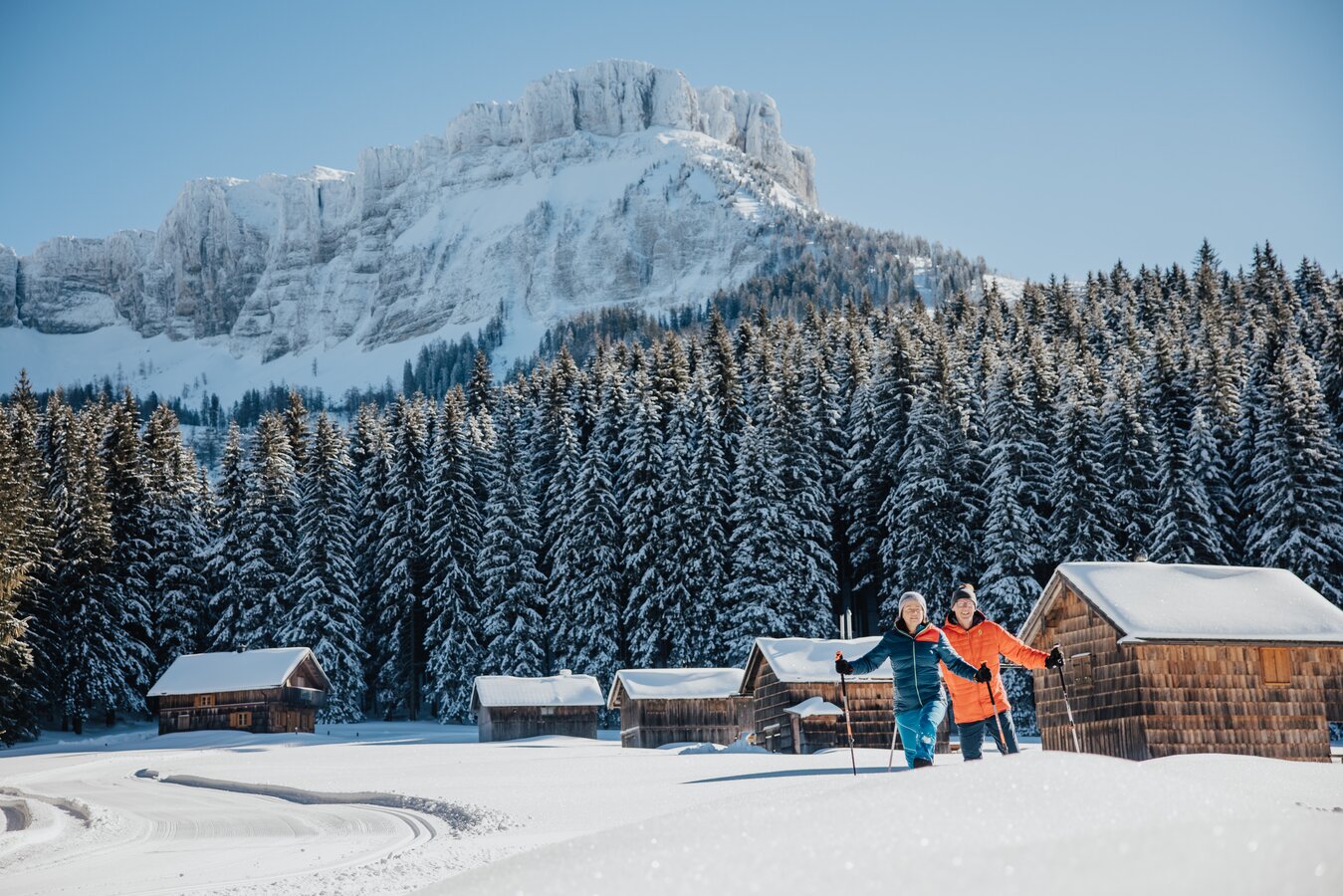


Explore All Winter Hiking Trails
From short lakeside walks to scenic panoramic trails across alpine pastures, Ausseerland Salzkammergut offers a wide variety of winter hikes for different abilities and preferences. Explore the complete overview of winter hiking trails, including route descriptions, trail maps and essential information for planning your winter hike.
Tip: The interactive tour planner allows you to filter winter hiking routes by various criteria, including trails with mountain huts or restaurants, family-friendly winter hikes and dog-friendly winter hiking routes.
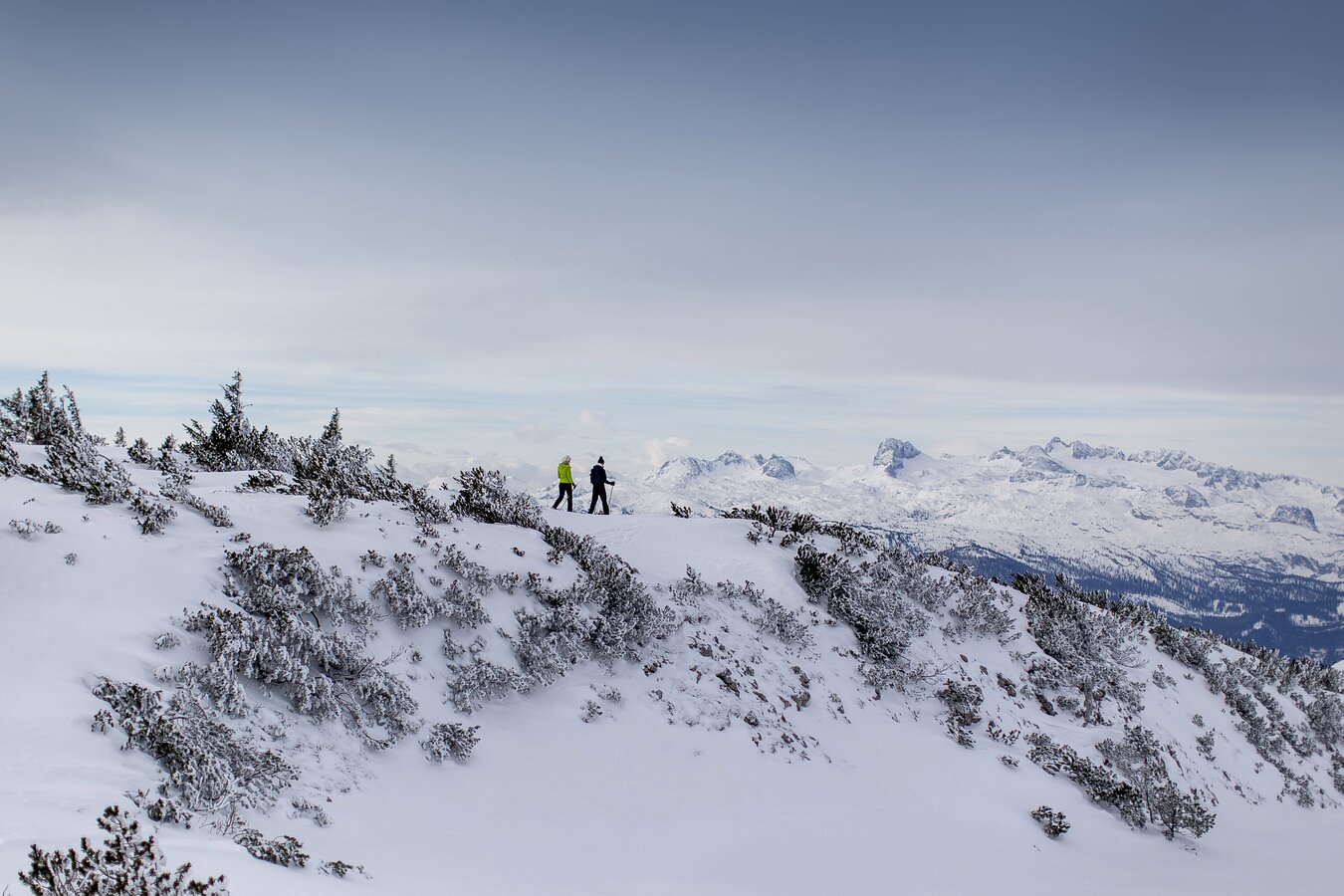
Snowshoe Hiking in Ausseerland Salzkammergut
Not every winter hike requires snowshoes. The marked winter hiking trails in the Ausseerland Salzkammergut region can generally be explored with sturdy winter boots, depending on snow and weather conditions. Snowshoes are particularly useful on ungroomed routes or in deeper snow.
The Tauplitzalm alpine pasture, Loser mountain and Blaa Alm alpine pasture in Altaussee offer scenic snowshoe hiking opportunities through the region’s mountain and lake landscapes.
Tip: Guided snowshoe hikes offer new perspectives beyond the groomed winter hiking trails. Led by experienced local guides, these tours combine memorable nature experiences in the snow-covered mountains with fascinating local knowledge.


4 Tips for Winter Hiking and Snowshoeing
In the Ausseerland Salzkammergut region


Frequently Asked Questions (FAQ):
Where Can You Go Winter Hiking in Ausseerland Salzkammergut?
Popular winter hiking areas include the Blaa Alm in Altaussee, the high-altitude plateau of the Tauplitzalm, the Kulm in Bad Mitterndorf, scenic trails around Bad Aussee and the surrounding lakes, and the winter hiking route from Gößl to Lake Toplitzsee near lake Grundlsee.
Which Winter Hikes Are Suitable for Families?
The overview of family-friendly winter hikes provides a selection of suitable routes. Particularly popular options include winter hikes on the Tauplitzalm alpine pastures, trails around the Blaa Alm alpine pasture, and the route from Grundlsee - Gößl to Lake Toplitzsee. Trail suitability depends on current snow and weather conditions.
When Is the Best Time for Winter Hiking?
The winter hiking season in Ausseerland Salzkammergut generally runs from December to March, depending on snow conditions. Higher-altitude areas such as the Tauplitzalm often experience winter conditions for longer periods.
Where Can I Find All Winter Hiking Trails in Ausseerland Salzkammergut?
The region’s interactive winter hiking map provides an overview of winter hiking routes throughout Ausseerland Salzkammergut, including difficulty levels, estimated walking times and elevation profiles.
What Is the Difference Between Winter Hiking and Snowshoeing?
Winter hiking generally takes place on groomed or cleared winter trails that can be explored with suitable winter footwear, depending on conditions. Snowshoeing involves using specialised footwear to walk through deep snow, often on ungroomed routes and through snow-covered natural landscapes.
Are Guided Snowshoe Hikes Available?
Yes. Guided snowshoe hikes with experienced local winter guides offer opportunities to explore the snow-covered landscapes of Ausseerland Salzkammergut. Guides also introduce participants to the correct use of snowshoes and share their knowledge of the region.
Where Can I Rent Snowshoes?
Suitable snowshoeing equipment is available from selected snowshoe rental providers in Ausseerland Salzkammergut.
What Equipment Is Recommended for Winter Hiking?
Warm clothing worn in layers and sturdy, ankle-high winter boots provide a good foundation. Snowshoes are needed for routes through deeper snow away from cleared trails. When snowshoeing in alpine terrain, carrying avalanche safety equipment, including an avalanche transceiver, probe and shovel, is essential. Appropriate knowledge and an assessment of current avalanche conditions are equally important.
What Should I Keep in Mind When Winter Hiking with a Dog?
To protect the natural environment, dog owners should stay on marked trails and dispose of dog waste in designated bins. Dogs must be kept on a leash throughout Ausseerland Salzkammergut. Carrying a muzzle is also recommended for safety reasons.
Further information is available on the Holidays with Pets page.


