


St. Nicholas Plays & Krampus Traditions in the Ausseerland Salzkammergut
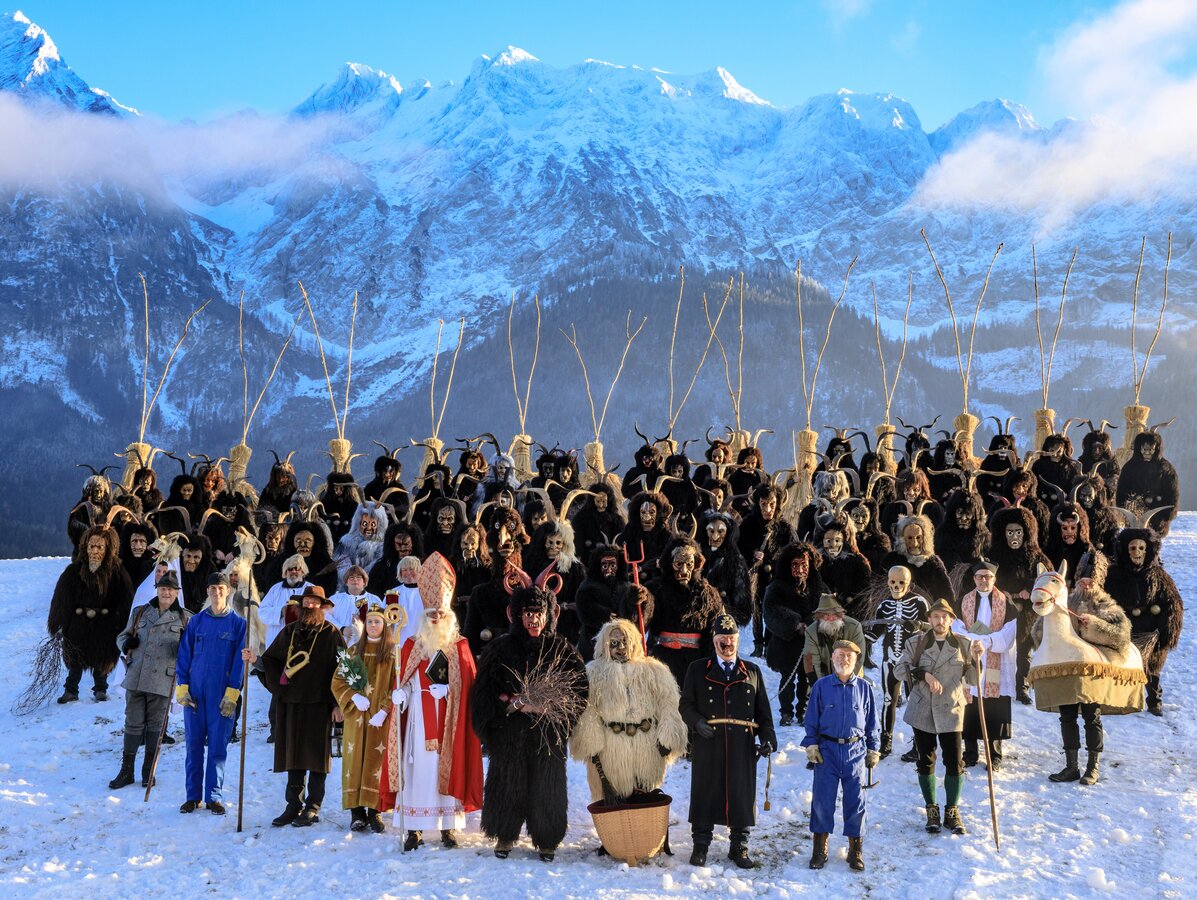
On December 5, the traditional Miglotog is celebrated in the Ausseerland Salzkammergut region. Krampuses, also known locally as “Miglon,” parade through the towns alongside St. Nicholas. While in Altaussee, Bad Aussee, and Grundlsee the Krampus groups go from house to house, the traditional St. Nicholas plays take center stage in Bad Mitterndorf, Tauplitz, and Pichl-Kainisch.
The St. Nicholas Play in Bad Mitterndorf holds special significance; it has been listed as part of Austria’s UNESCO Intangible Cultural Heritage since 2020. This traditional folk play combines centuries-old traditions, impressive masks, and historical scripts. Around December 5, the diverse St. Nicholas and Krampus customs come to life in the Ausseerland region of the Salzkammergut.
At a Glance
- Date: Annually on December 5, the eve of St. Nicholas Day.
- UNESCO Intangible Cultural Heritage: The St. Nicholas Play in Bad Mitterndorf, listed on the Austrian Register of Intangible Cultural Heritage since October 2020.
- St. Nicholas Plays: Bad Mitterndorf, Tauplitz, and Pichl-Kainisch.
- Krampus processions: House visits in Altaussee, Bad Aussee, and Grundlsee.
- Regional name: Miglotog; the Krampuses are also called “Miglon.”
- Traditional characters: St. Nicholas, Schab, Bartl, Habergeiß, Grasteufel, and other figures.
St. Nicholas plays and Krampus events around December 5
Around December 5, the Ausseerland Salzkammergut region hosts traditional St. Nicholas plays, mask exhibitions, and home visits by the Krampus groupes. The UNESCO-recognized St. Nicholas play in Bad Mitterndorf is one of the most significant events. Tauplitz and Pichl-Kainisch also maintain their own traditions of these plays. In Altaussee, Bad Aussee, and Grundlsee, the Krampus groups are a central feature of Miglotog. The event calendar provides information on current performances, start times, and venues.
18 results


The St. Nicholas Play in Bad Mitterndorf: UNESCO Intangible Cultural Heritage
The traditional St. Nicholas play in Bad Mitterndorf in the Ausseerland region of the Salzkammergut is one of the oldest surviving rural folk plays in Austria. It has been listed on UNESCO’s National Register of Intangible Cultural Heritage since October 2020.
Every year on December 5, the group, accompanied by its historical characters, parades from Krungl through several performance stations to the village square in Bad Mitterndorf. The scripts, which are more than 100 years old, combine religious messages, social themes, and humorous scenes. Particularly impressive are the “Schab,” dressed in straw costumes and sporting long horns, who lead the procession with the crack of their whips.
St. Nicholas Play in Tauplitz and Pichl-Kainisch
In addition to Bad Mitterndorf, Tauplitz and Pichl-Kainisch in the Ausseerland region of the Salzkammergut also have their own St. Nicholas play traditions. The performances differ in scope, characters, and local traditions. In Tauplitz, impressive wooden masks, bells, and the crack of whips accompany the traditional play on December 5.
Regional variations are also preserved in Kainisch and Obersdorf. The passing down of the play scripts, the carving of the masks, and the preparation of the costumes bring together several generations.


Schab, Habergeiß and Grass Devil
Notable Figures in this Tradition
The St. Nicholas play and the Krampus groups in the Ausseerland Salzkammergut region feature extraordinary characters. Some embody religious messages, while others symbolize nature, life, and death. Their masks, costumes, and roles vary depending on the location and local traditions.

The Schab: Announcers of the St. Nicholas Play
Wrapped in straw and wearing horns several meters high, the Schab open the St. Nicholas play in Bad Mitterndorf. They announce the procession with the rhythmic cracking of their whips.


The Habergeiß: A mysterious winter Figure
The Habergeiß is an animal-like figure from regional folklore. It appears in St. Nicholas plays and Krampus groups and symbolizes winter.


The Grass Devil: A symbol of life
The "Grasteufel" is part of the Krampus groups in Altaussee, Bad Aussee, and Grundlsee. Every year, his costume is elaborately decorated with fir branches. He symbolizes life.


The Moss Devil: Life at Rest
In regional folklore, the Miasteufel, also known as the Moss Devil, represents life in a state of rest and death. It thus serves as the symbolic counterpart to the Grasteufel.


Bartl: Gifts for the children
At the St. Nicholas play in Bad Mitterndorf, the “Bartl” carries a wicker basket filled with fruit and candy. His historic wooden mask is said to be over 200 years old.


The Krampuses: St. Nicholas's Dark Companions
The Krampuses, known regionally as “Miglon,” accompany Saint Nicholas. Hand-carved wooden masks, fur robes, and bells characterize their appearance during the Saint Nicholas play and traditional house visits.

Frequently Asked Questions:
When does the St. Nicholas Play take place in Bad Mitterndorf?
The traditional St. Nicholas Play in Bad Mitterndorf takes place every year on December 5. The procession begins in Krungl and winds its way through several performance stops to the village square in Bad Mitterndorf. The final performance is usually scheduled for 9:00 p.m. The current times and venues can be found in the event calendar.
Why is the St. Nicholas Play in Bad Mitterndorf a UNESCO Intangible Cultural Heritage?
The St. Nicholas Play in Bad Mitterndorf was added to the Austrian Register of Intangible Cultural Heritage in October 2020. This designation recognizes the vibrant transmission of this traditional folk play, with its historical texts, distinctive characters, and time-honored performance styles. This is a national recognition under the UNESCO Convention.
What does “Miglotog” mean in the Ausseerland Salzkammergut region?
“Miglotog” is the regional term for Krampus Day on December 5. “Miglo” refers to the Krampus who accompanies St. Nicholas. In Altaussee, Bad Aussee, and Grundlsee, Krampus groups traditionally go from house to house. In Bad Mitterndorf and Tauplitz, the day is primarily marked by the St. Nicholas plays.
What is the difference between the St. Nicholas Play and the Krampus Parade?
The St. Nicholas Play is a traditional folk play featuring set characters, traditional scripts, and several scenes. A Krampus procession, on the other hand, focuses on the masked Krampus groups. In the Ausseerland region of the Salzkammergut, there are also the traditional house visits by the Krampus groups. The two traditions differ in their sequence of events, significance, and local customs.
Where can you find St. Nicholas plays and Krampus events in the Ausseerland region?
St. Nicholas plays are performed on December 5 in Bad Mitterndorf, Tauplitz, and the Pichl-Kainisch area. In Altaussee, Bad Aussee, and Grundlsee, house visits by the Krampus groups are part of the traditional customs. In addition, local St. Nicholas and Krampus events take place. The event calendar lists the current dates, start times, and venues.

Experience the Traditions of the Ausseerland Salzkammergut
Traditional St. Nicholas plays, Krampus parades, and special Advent events characterize the “quiet season” in the Ausseerland Salzkammergut region. The event calendar provides an overview of current dates and venues.